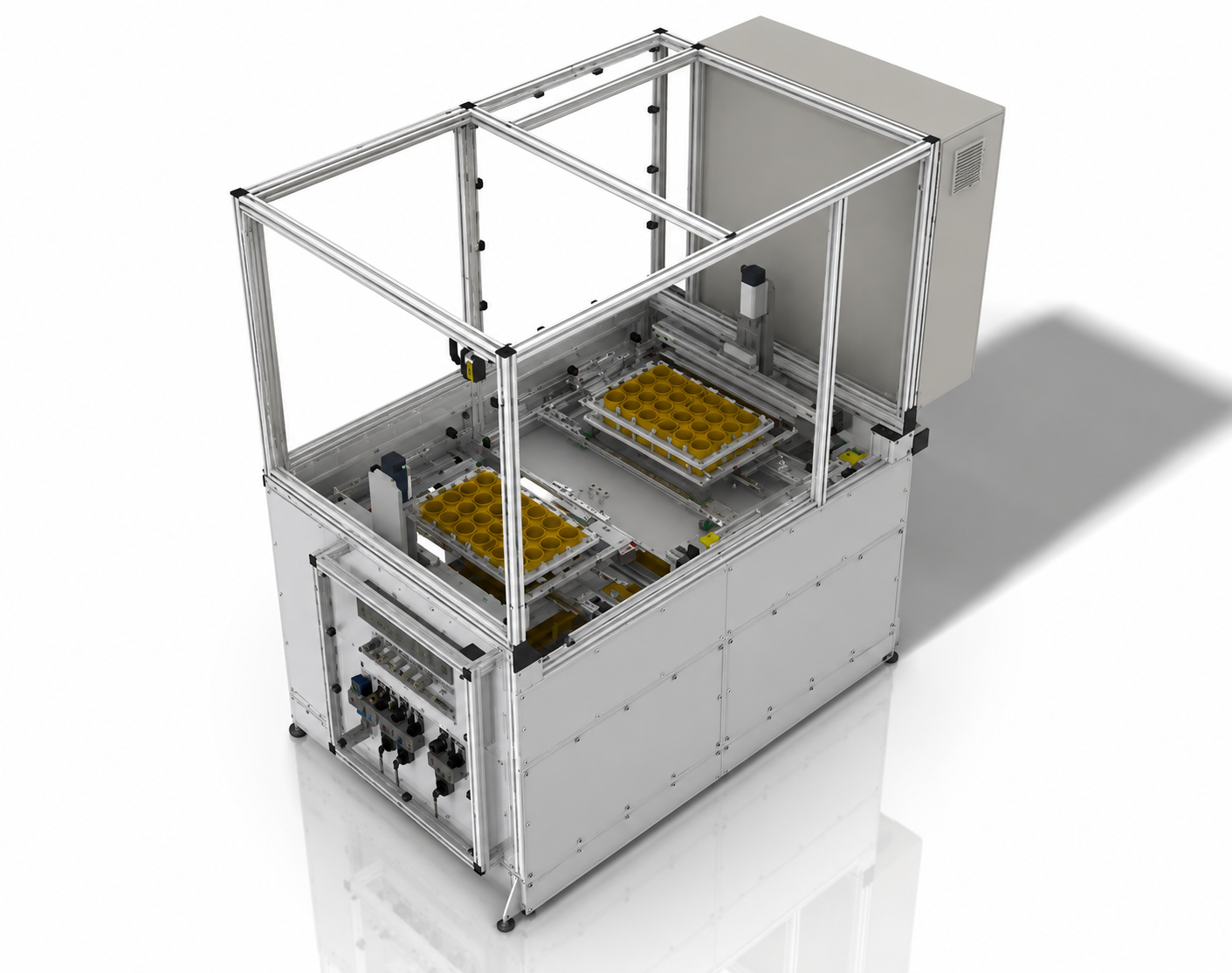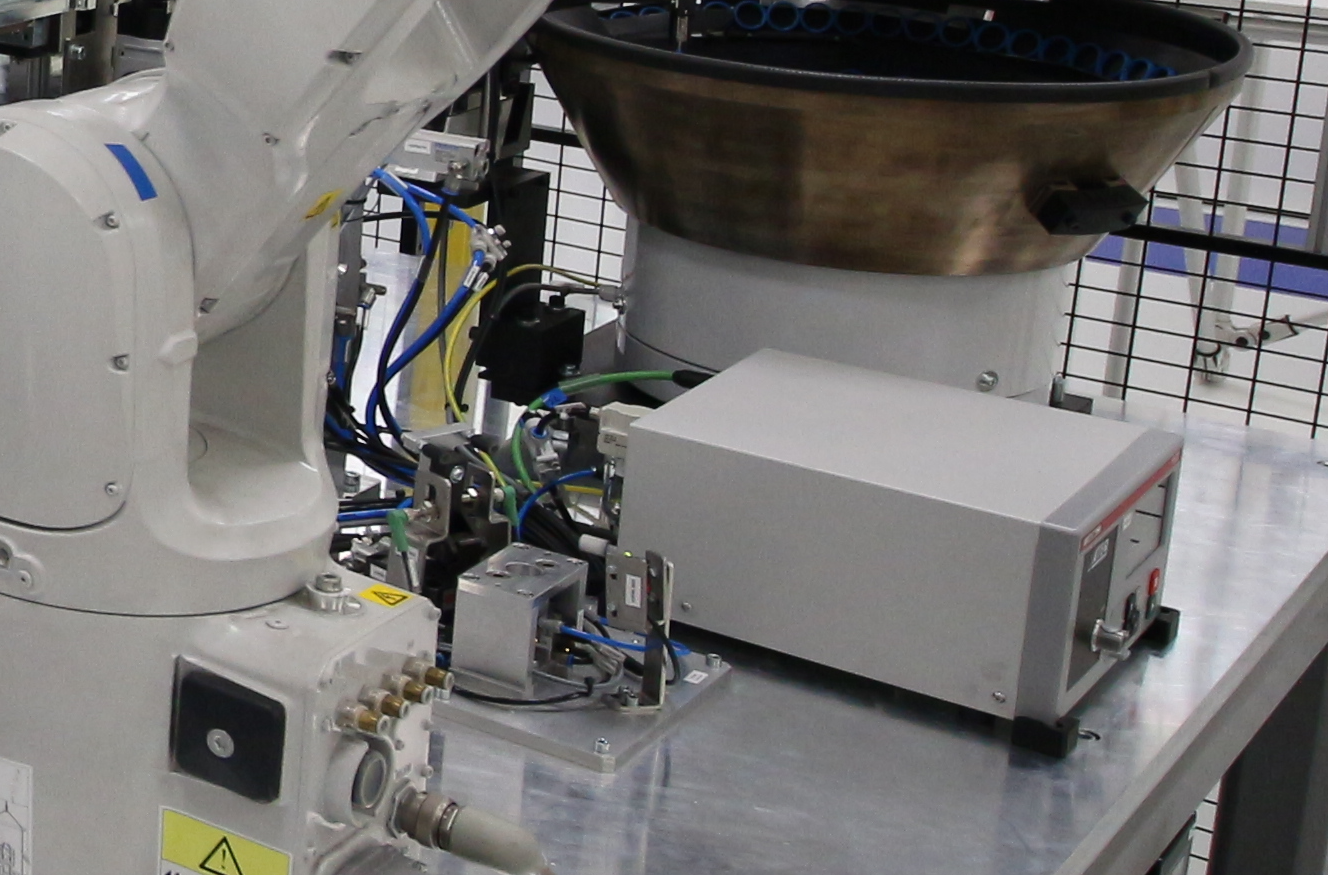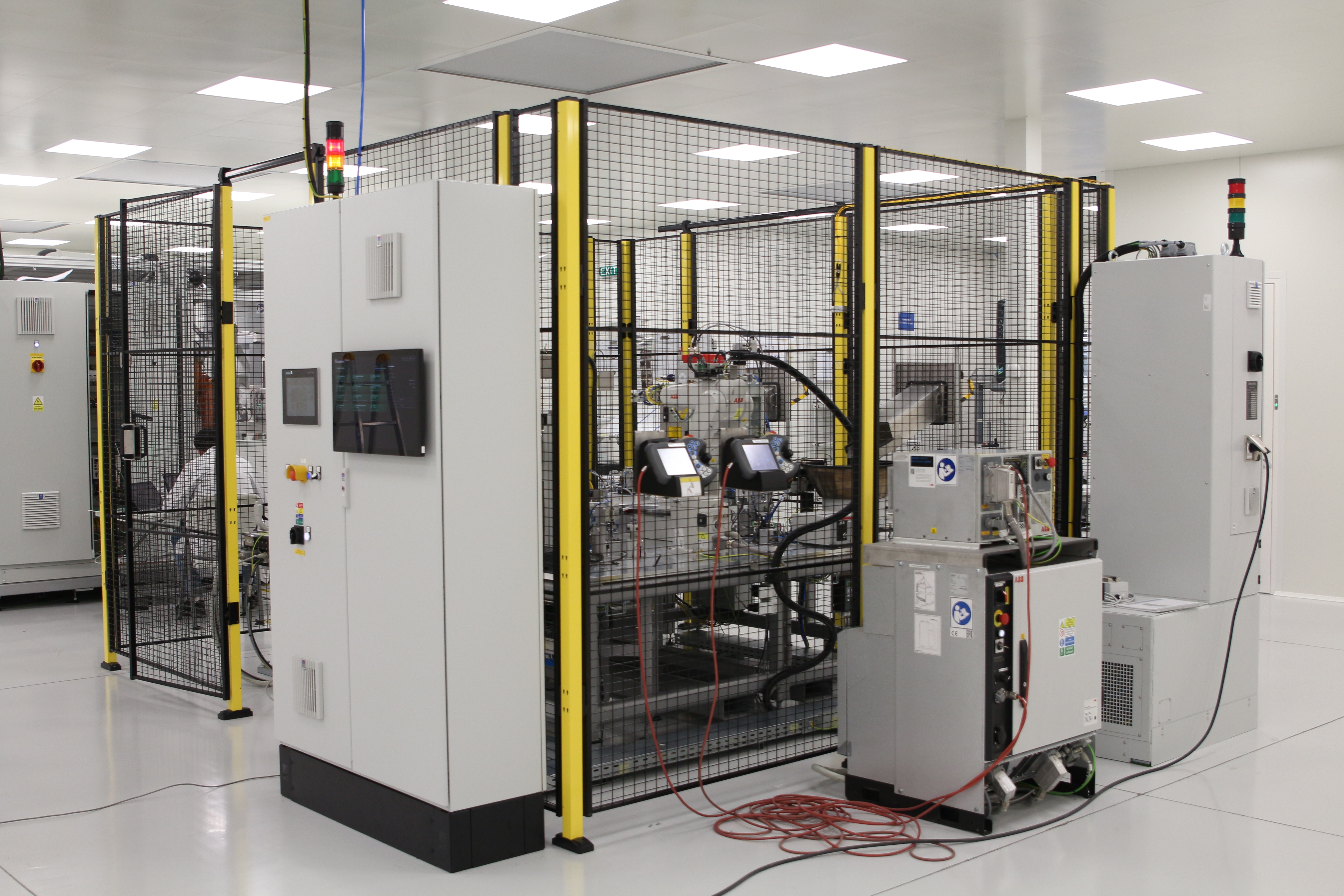
Robotic workstation for sensor assembly and testing
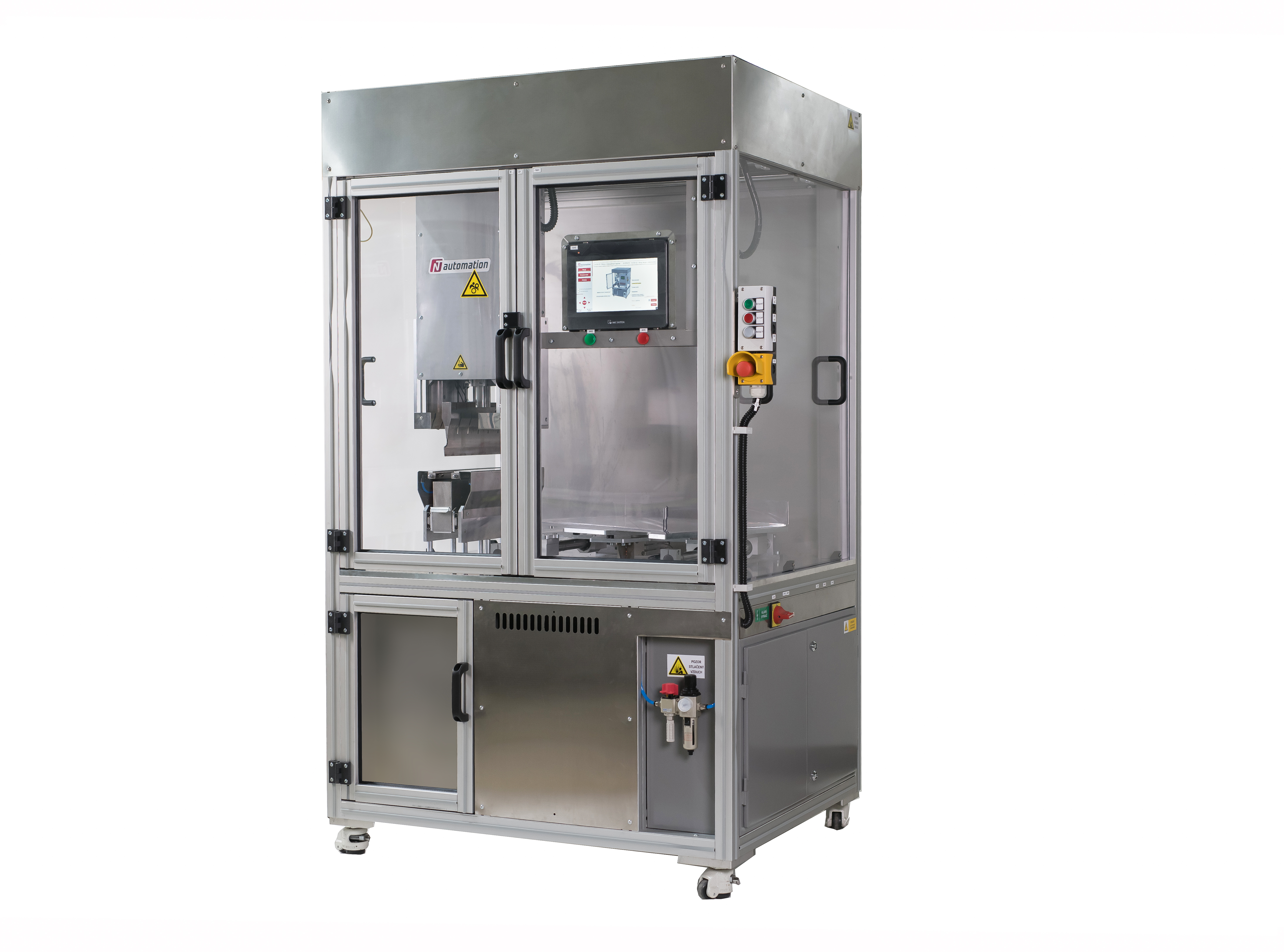
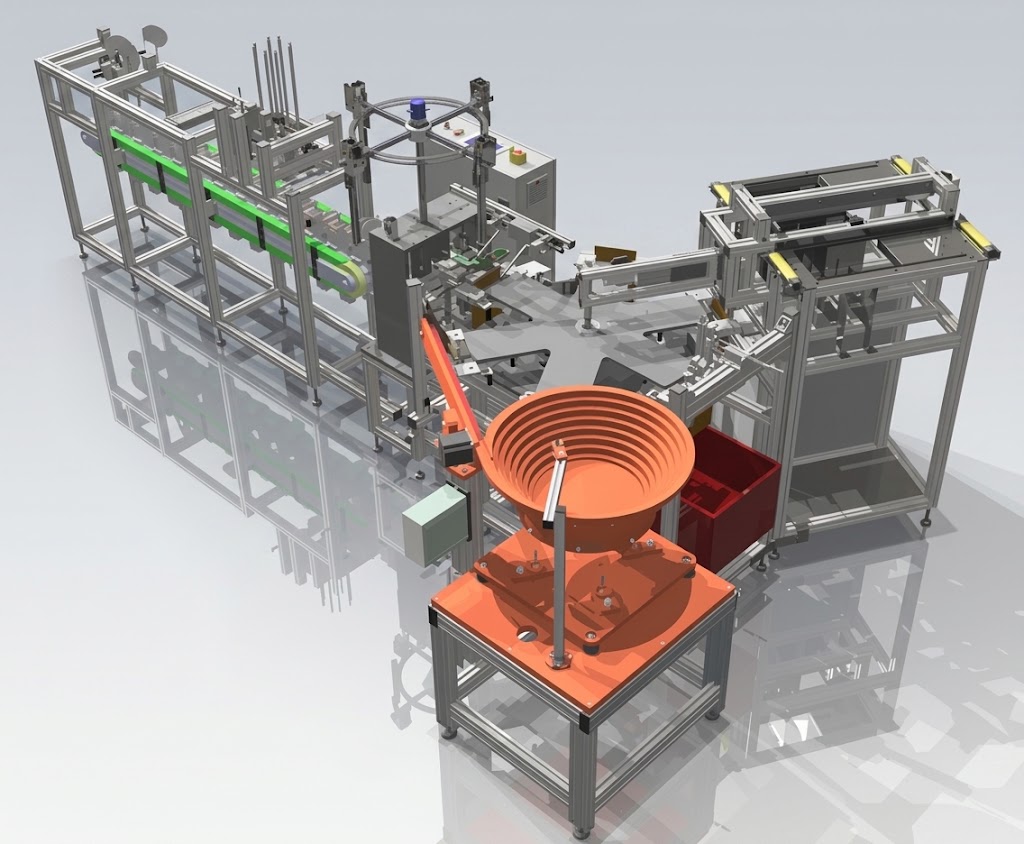
2x ABB robots, rotary indexing table station, component assembly, laser welding, leak test, electrical & functional testing, laser marking

Here you can find a selection of our industrial automation projects that reflect our custom technical solutions and reliable integration into production processes.
2x ABB robots, rotary indexing table station, component assembly, laser welding, leak test, electrical & functional testing, laser marking
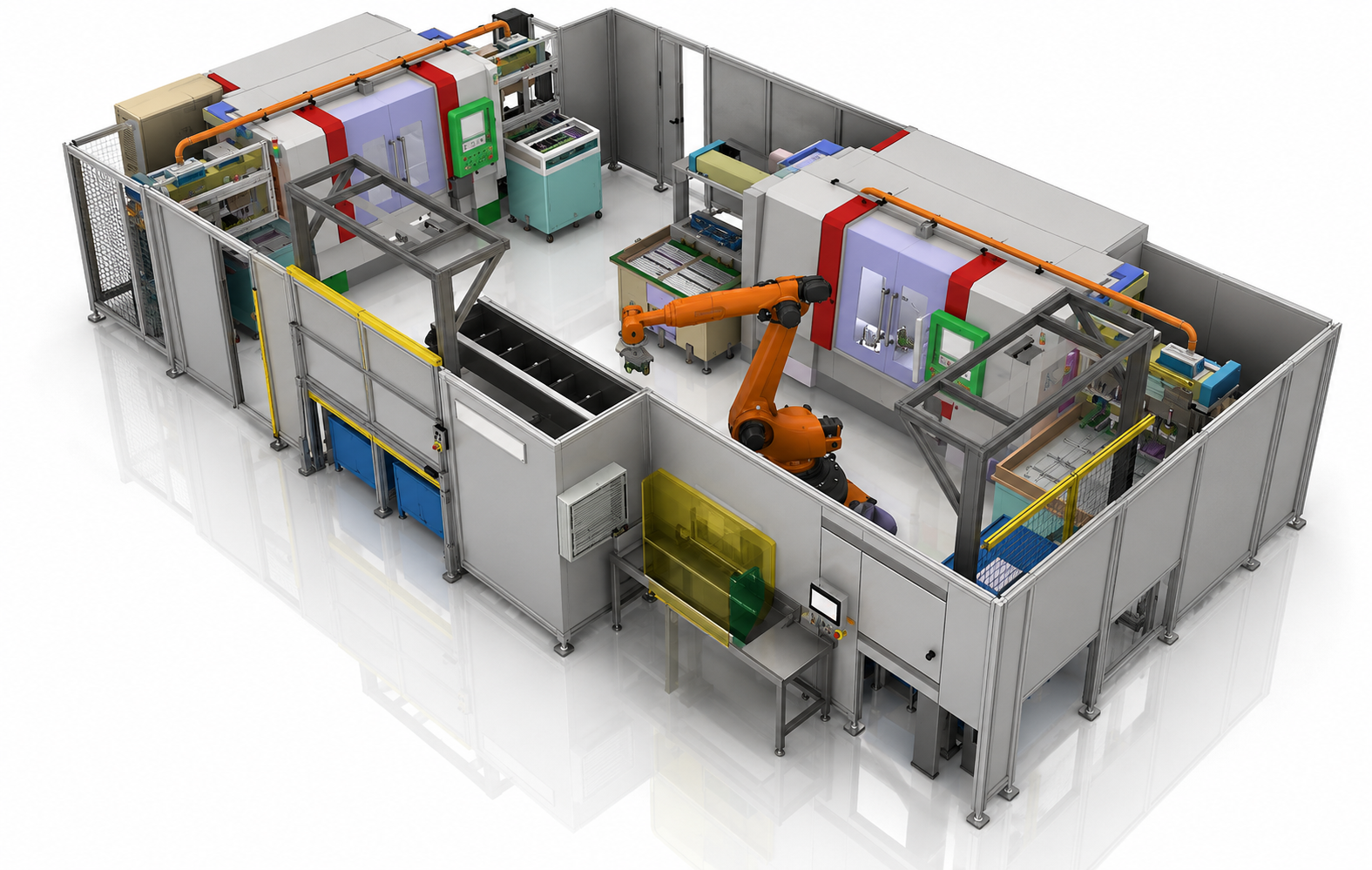
The workstation uses a robot on a linear track. Guided by a bin-picking vision system, it removes shafts from a pallet and transfers them between two CNC lathes. The line uses a Siemens control system.
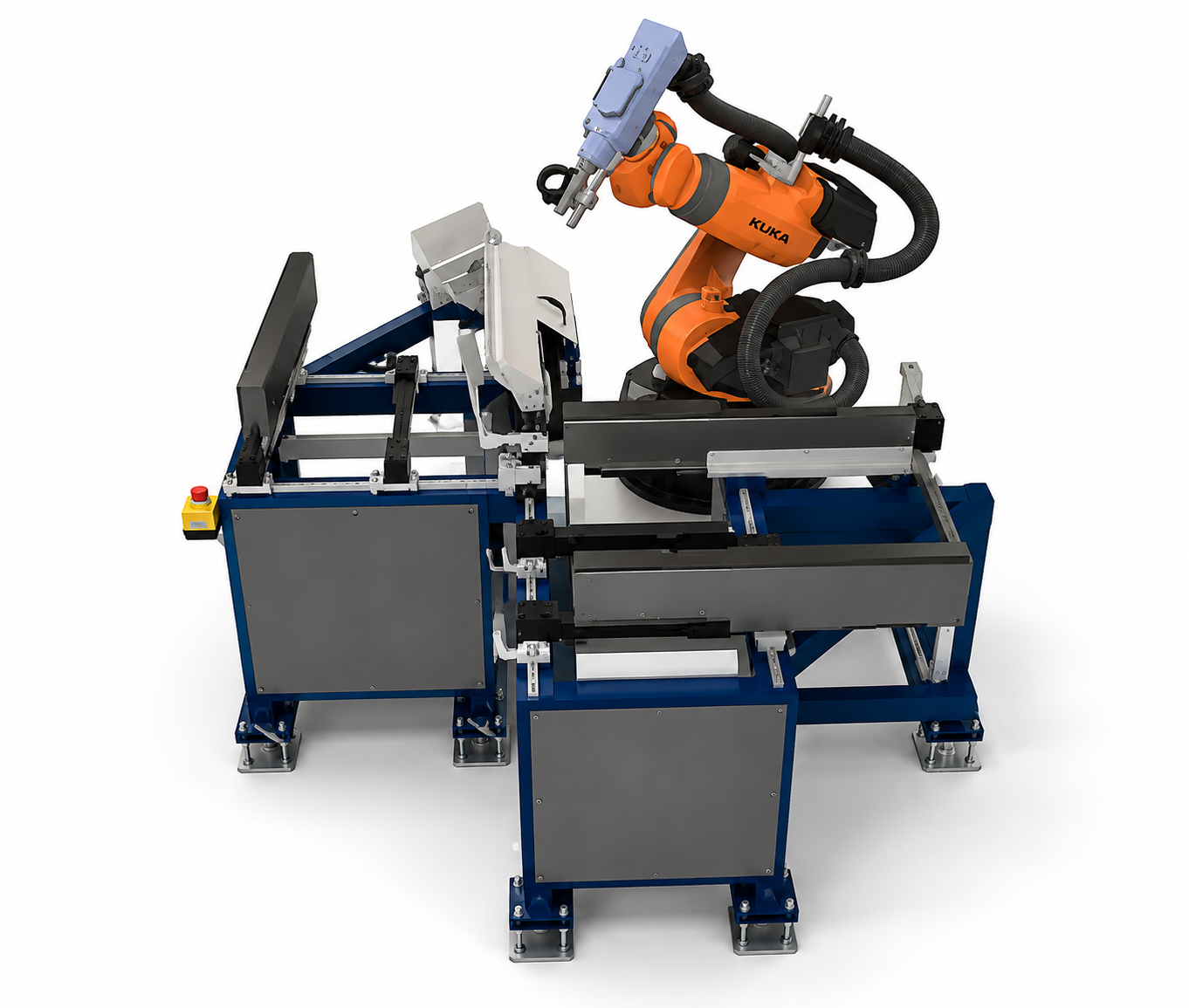
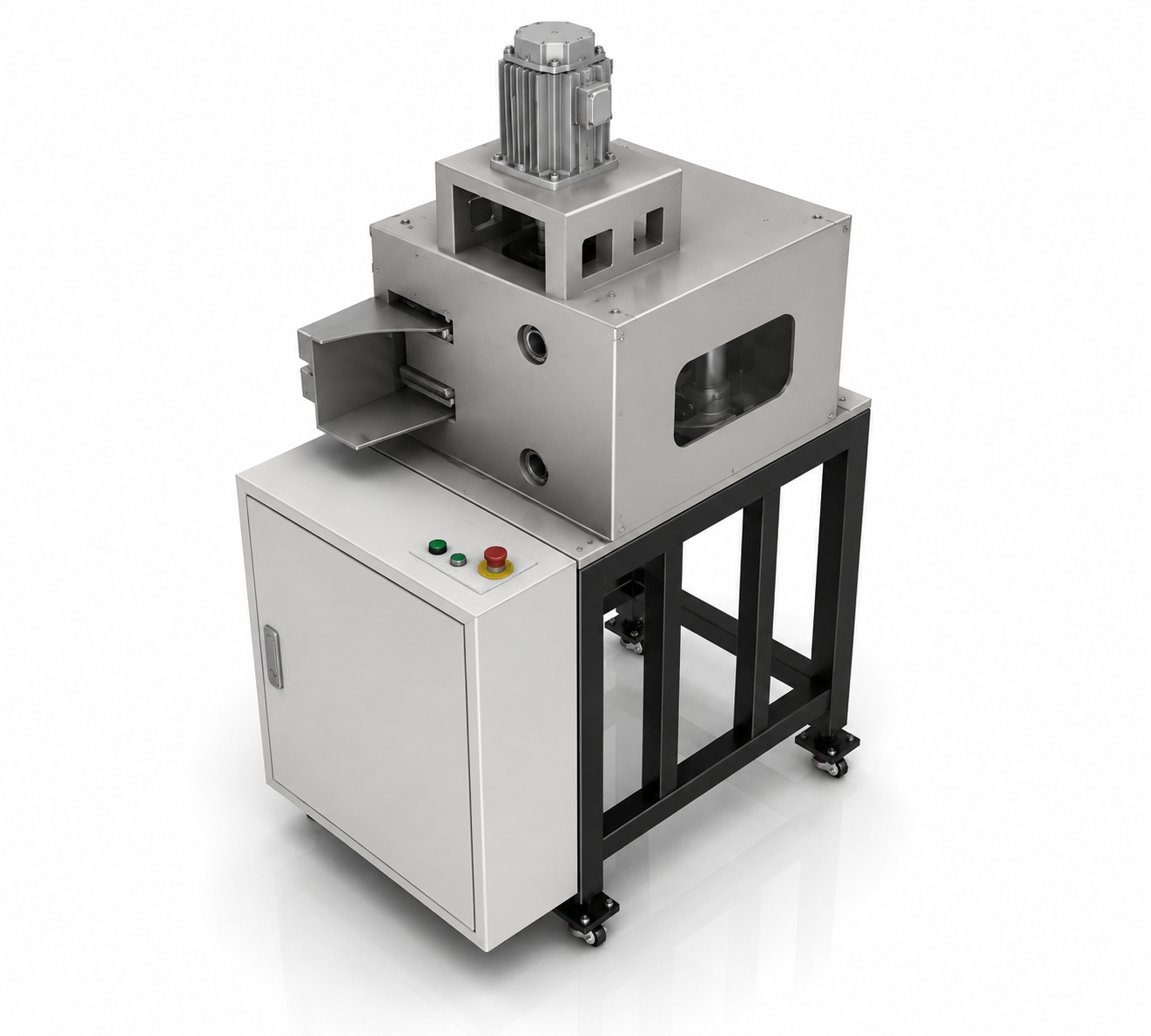
The workstation automatically mills and levels welds and chamfers the edges of copper and aluminium sheets for electrical production. Its clamping table accommodates dozens of sheet sizes and shapes with a typical thickness of about 7 mm.
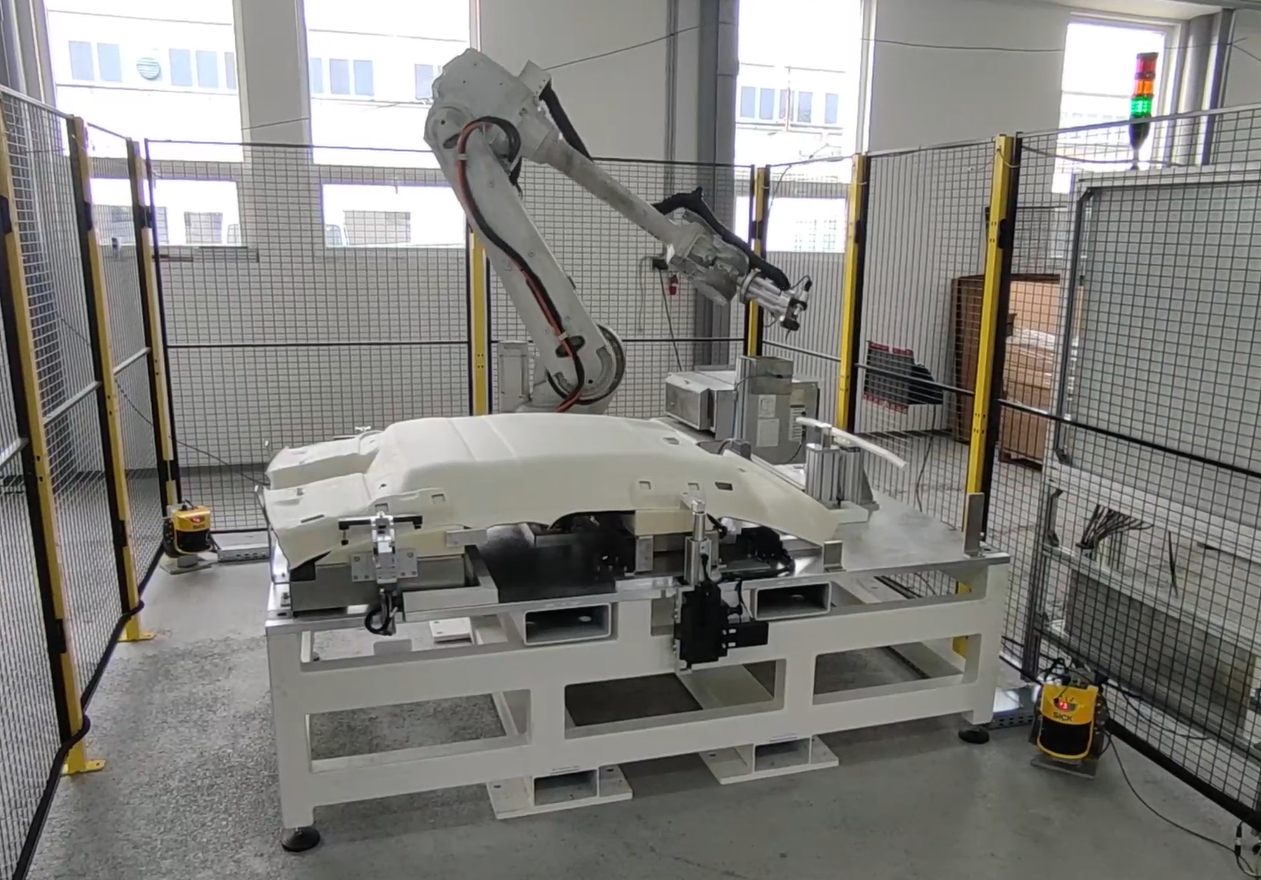
The workstation cuts automotive headliners to ensure correct airbag deployment, creates sunroof openings and performs other contour modifications. An ABB robot equipped with an ultrasonic cutting head performs the cutting. Safety floor scanners protect the cell area.
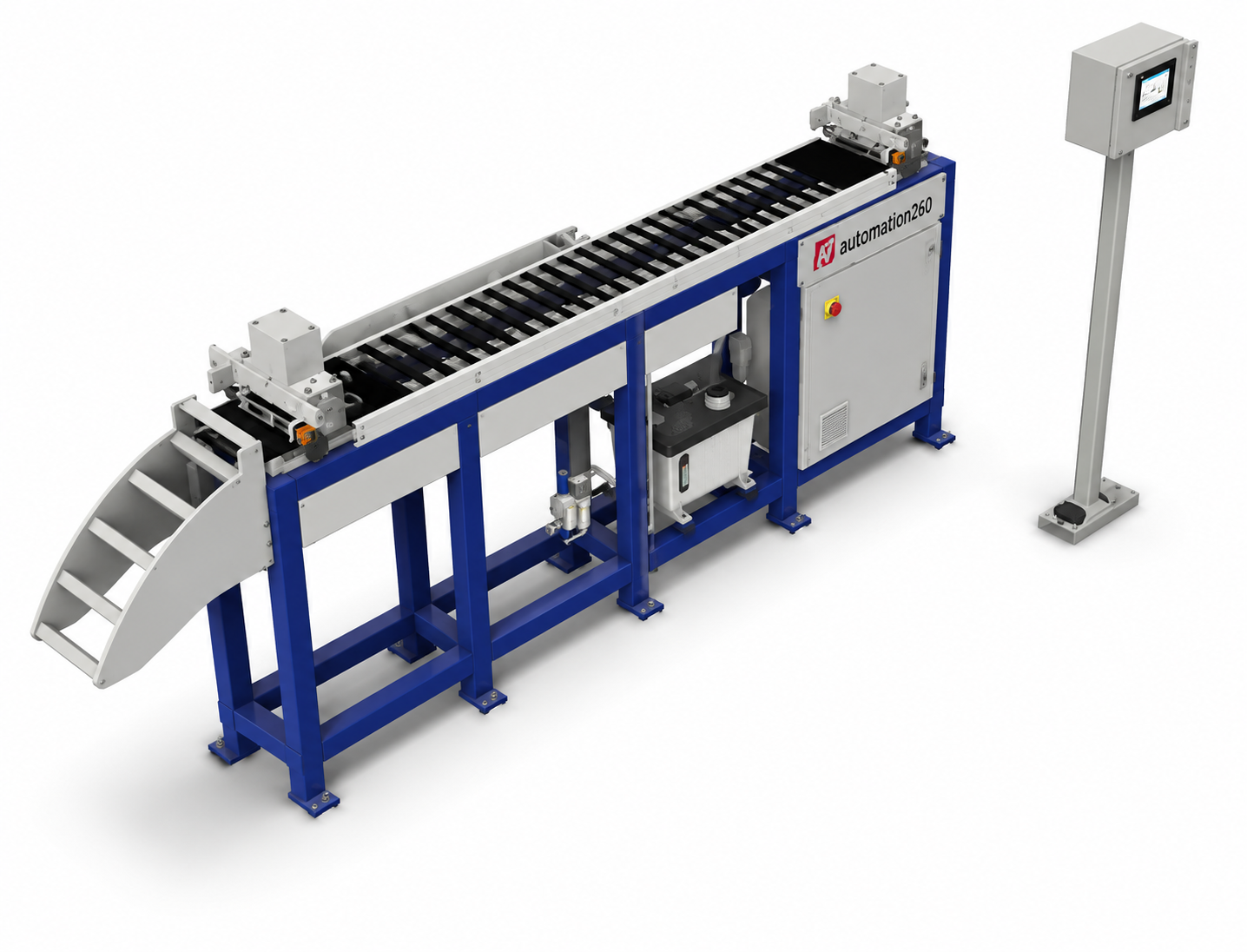
Aluminium strip is fed from a coil, typically 50–250 mm wide and 0.4–1.8 mm thick. Hydraulic jaws grip and straighten it both across the surface and laterally. The lateral deviation at the output is less than 1 mm over a length of 3 m.
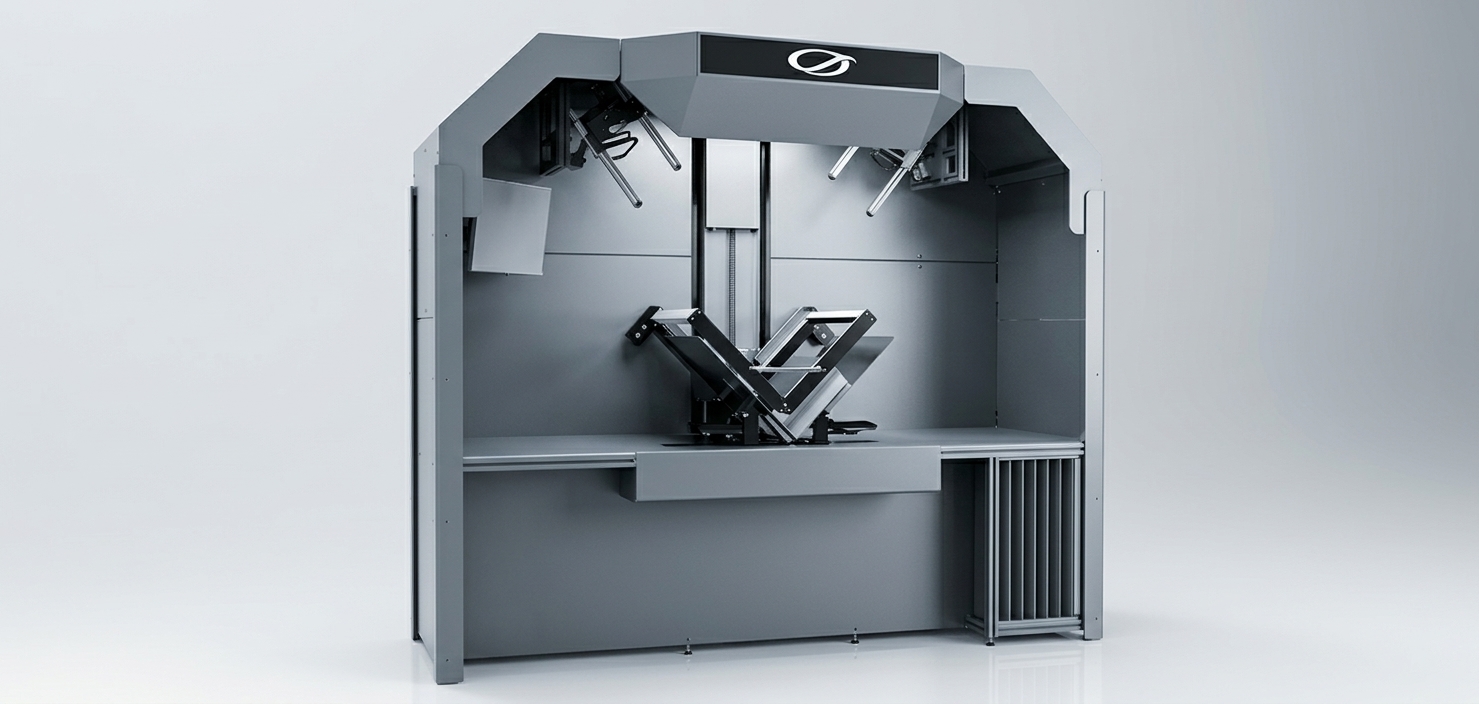
An ultrasonic knife cuts cakes and desserts. The blade is cleaned automatically at defined intervals. The design complies with food-industry standards.
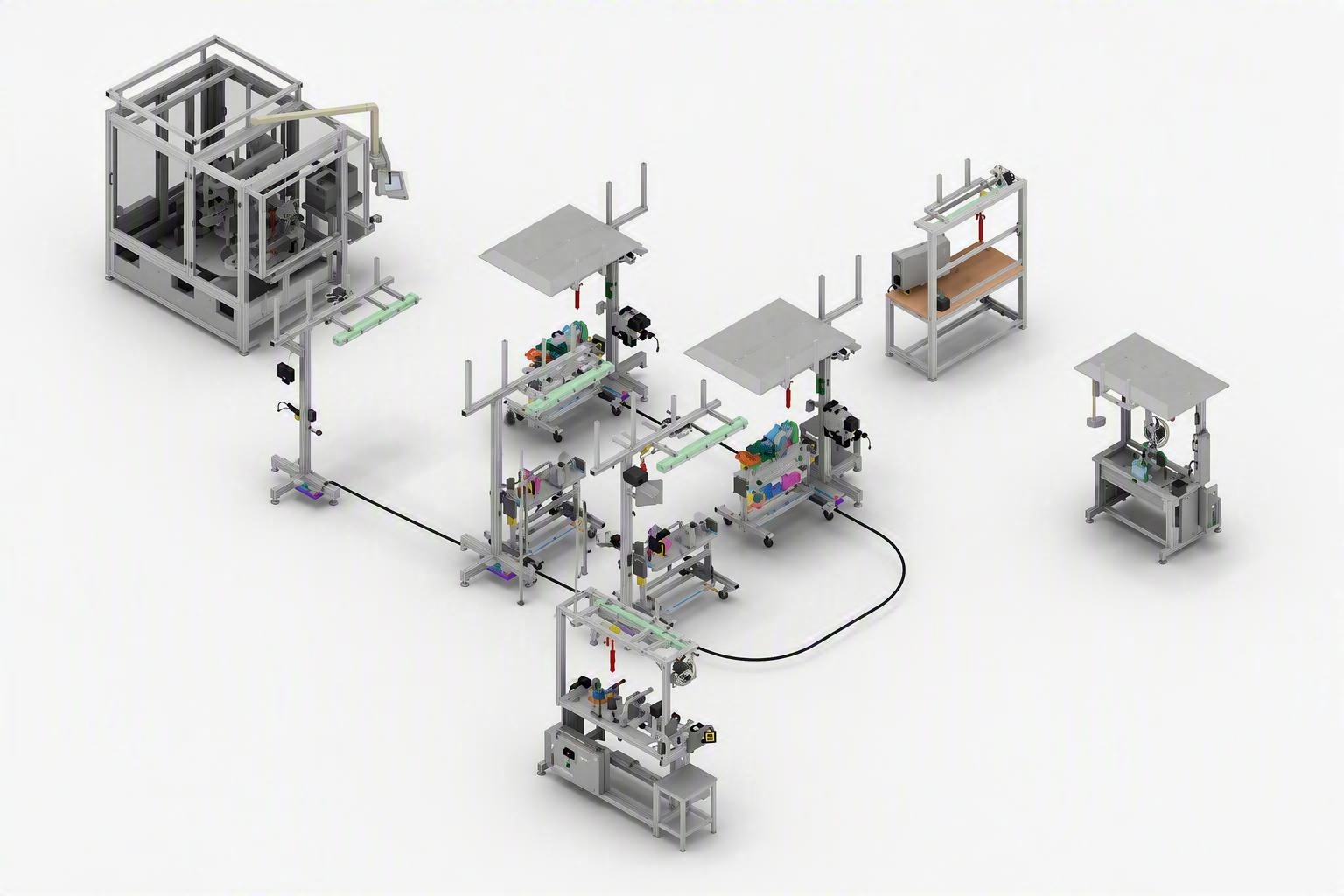
Automotive HVAC assembly line with a trolley-based transport system. It includes industrial screwdrivers, vision inspection of components and an end-of-line station with leak testing, connector checks and FCT functional testing.
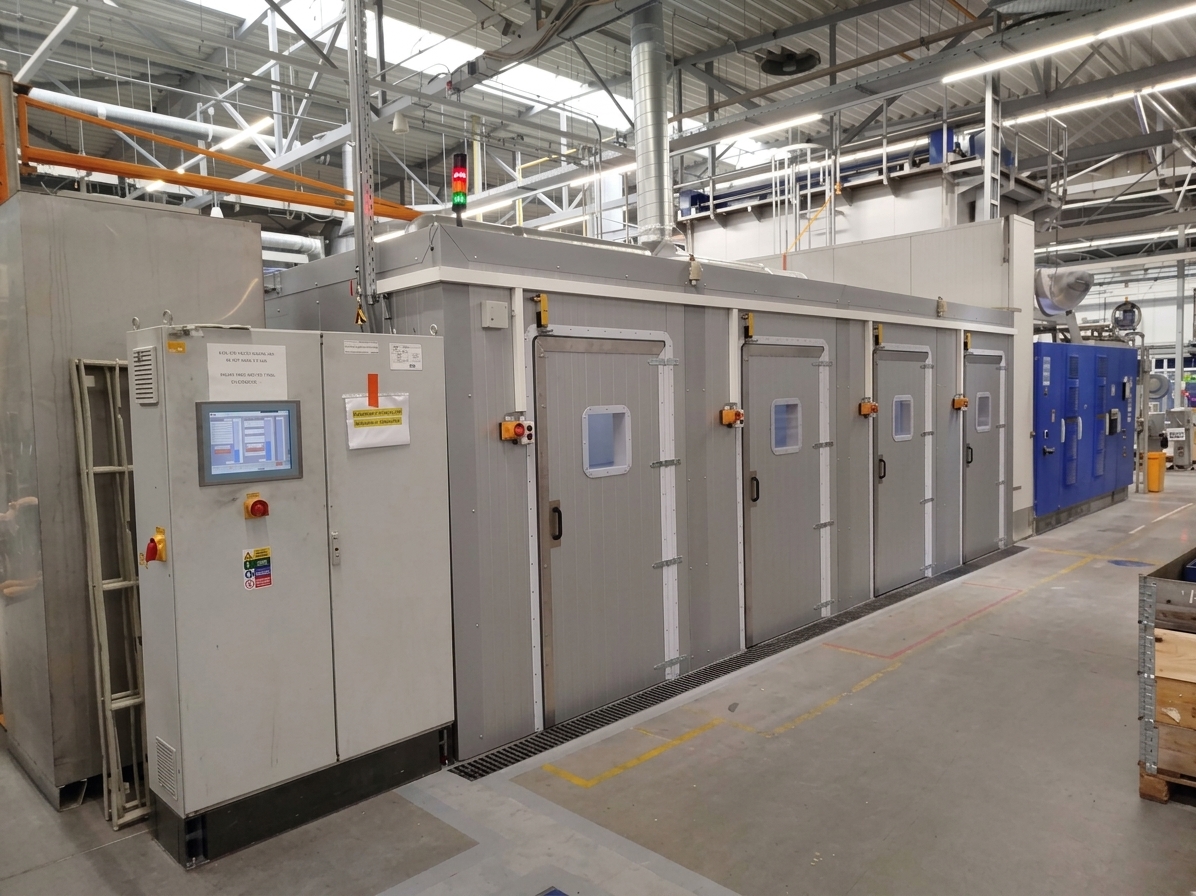
The line uses handling systems to dip-coat printed circuit boards in lacquer tanks. The boards are dried in an output tunnel. The entire machine has a specially designed extraction system and an ATEX-rated design for potentially explosive atmospheres.
Station for welding the rear section of a car seat. Nine ultrasonic sonotrodes weld the plastic pins.
Automatic respirator production line. Rubber straps are ultrasonically welded and the finished respirators are automatically packed in bags.
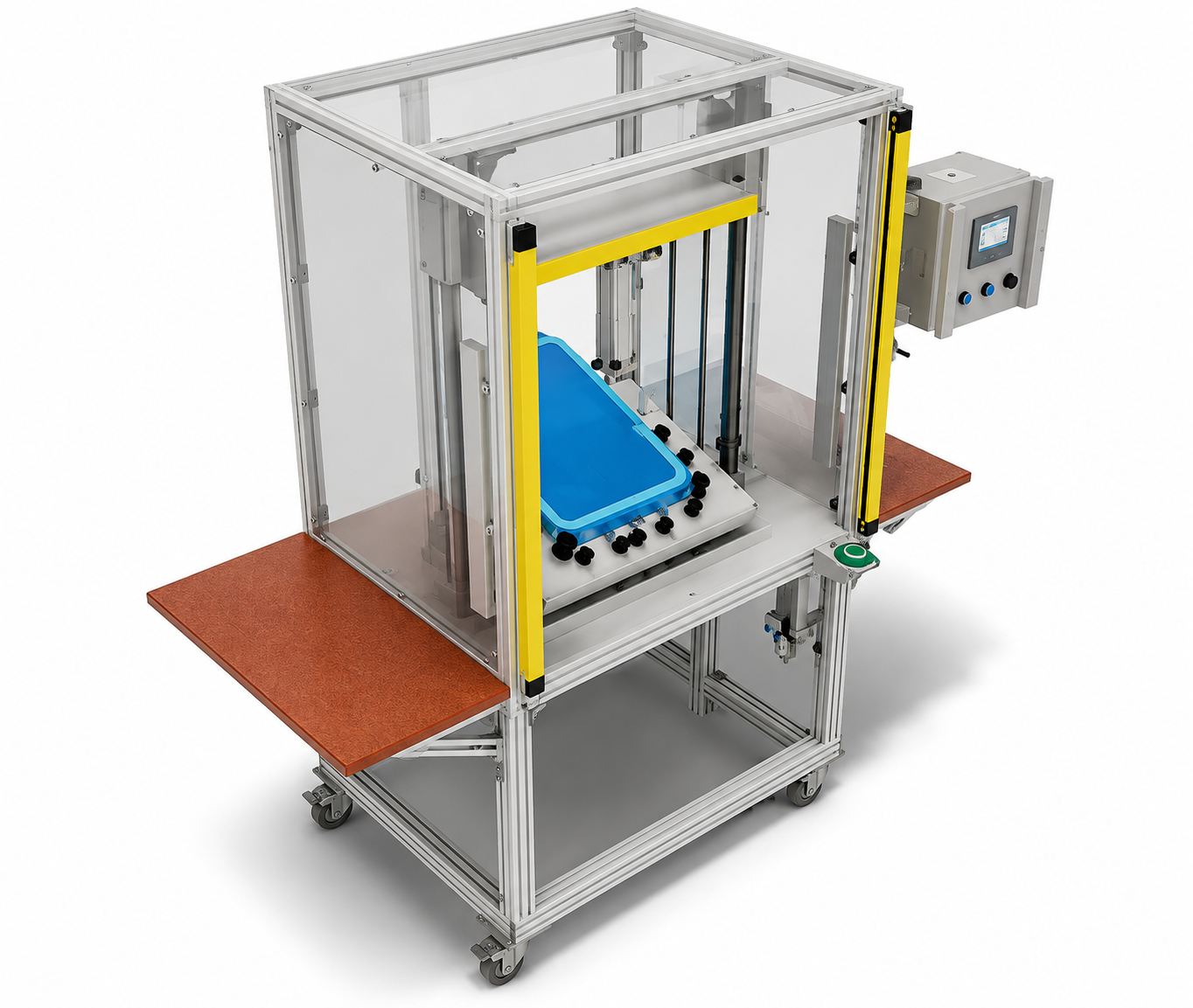
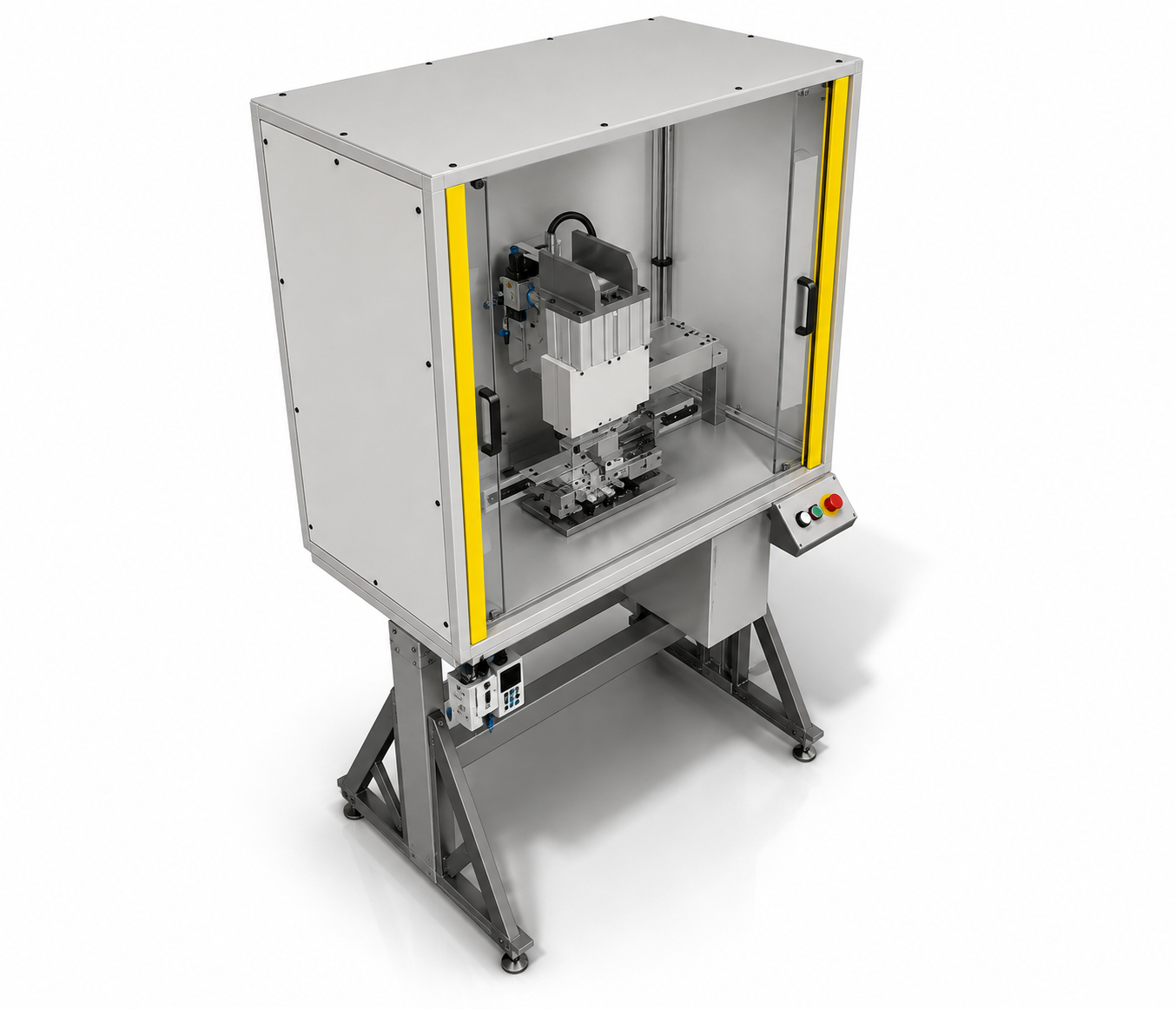
The machine provides semi-automatic pressing of threaded nuts into aluminium profiles.
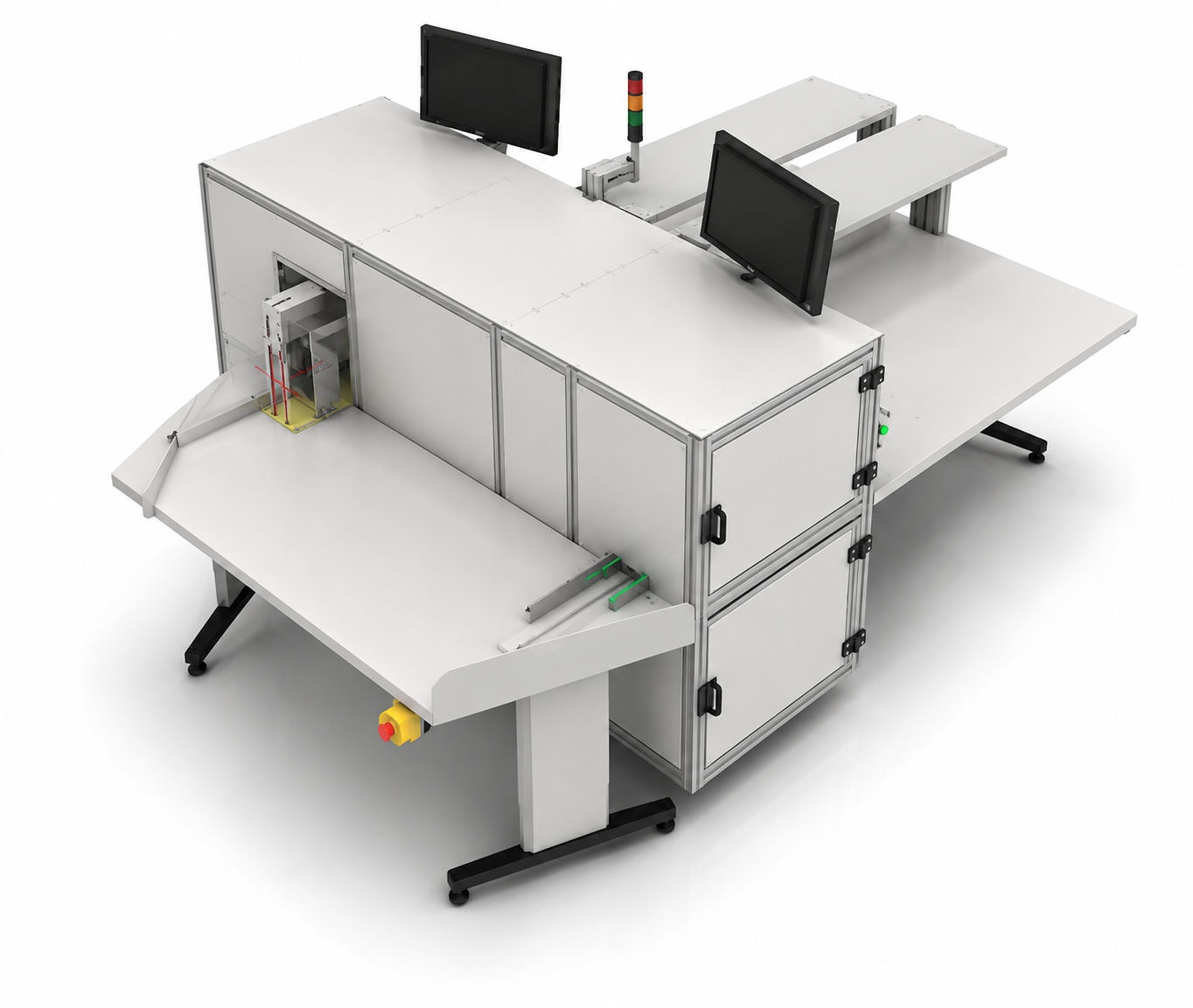
The operator loads boxes or product blisters into the station for vision inspection. Eight lenses and custom software verify box printing and codes, completeness, blister contents and the correct inserted product. The machine uses a Beckhoff control system.
The machine is designed for series production of the internal gearing of a brass gear wheel for a 3D printer. It uses a Siemens control system.
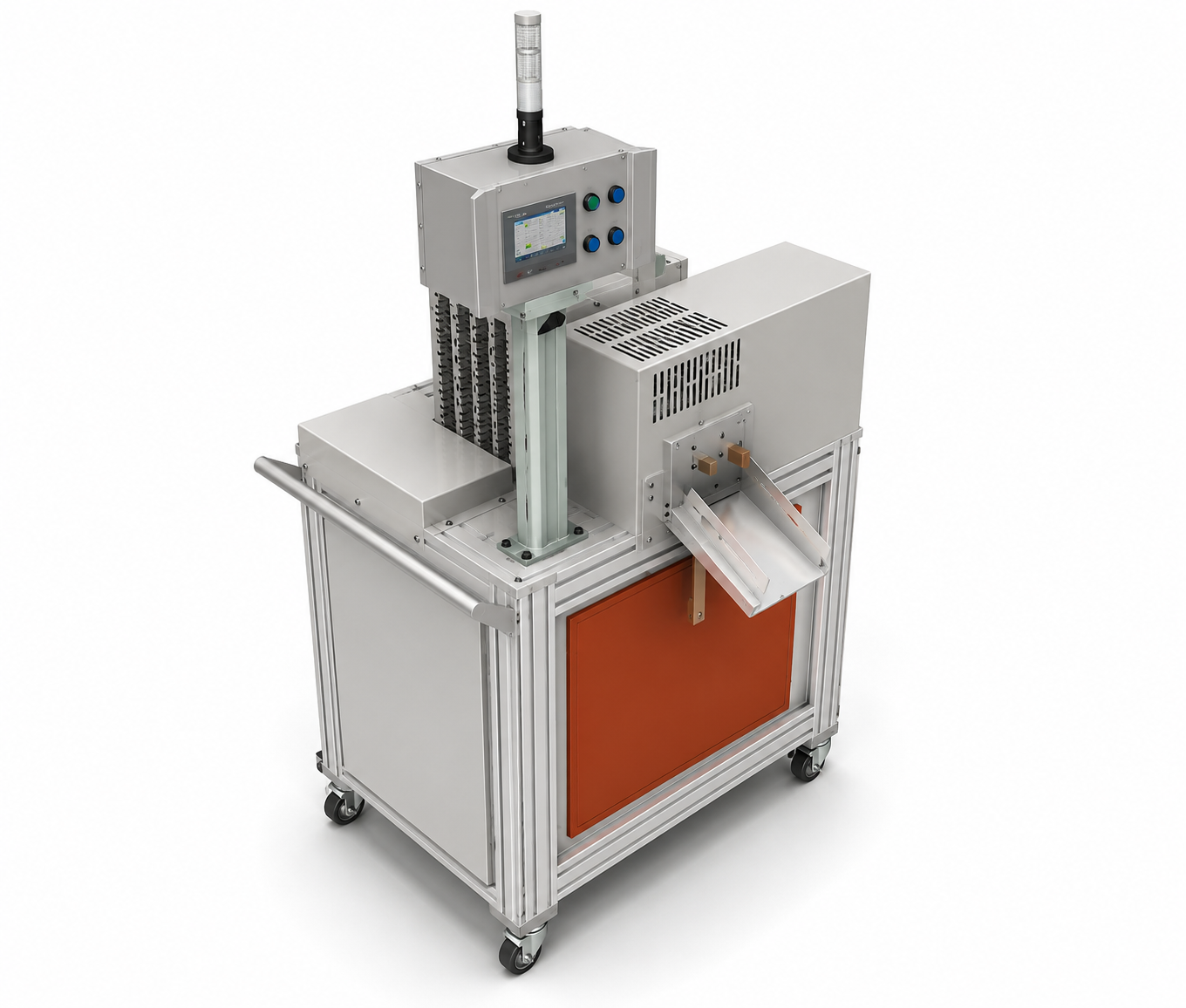
The system stores steel parts and preheats them to 300 °C using contactless induction heating. It dispenses a defined number of heated parts into a portable basket for the subsequent welding process. A pyrometer monitors product temperature.
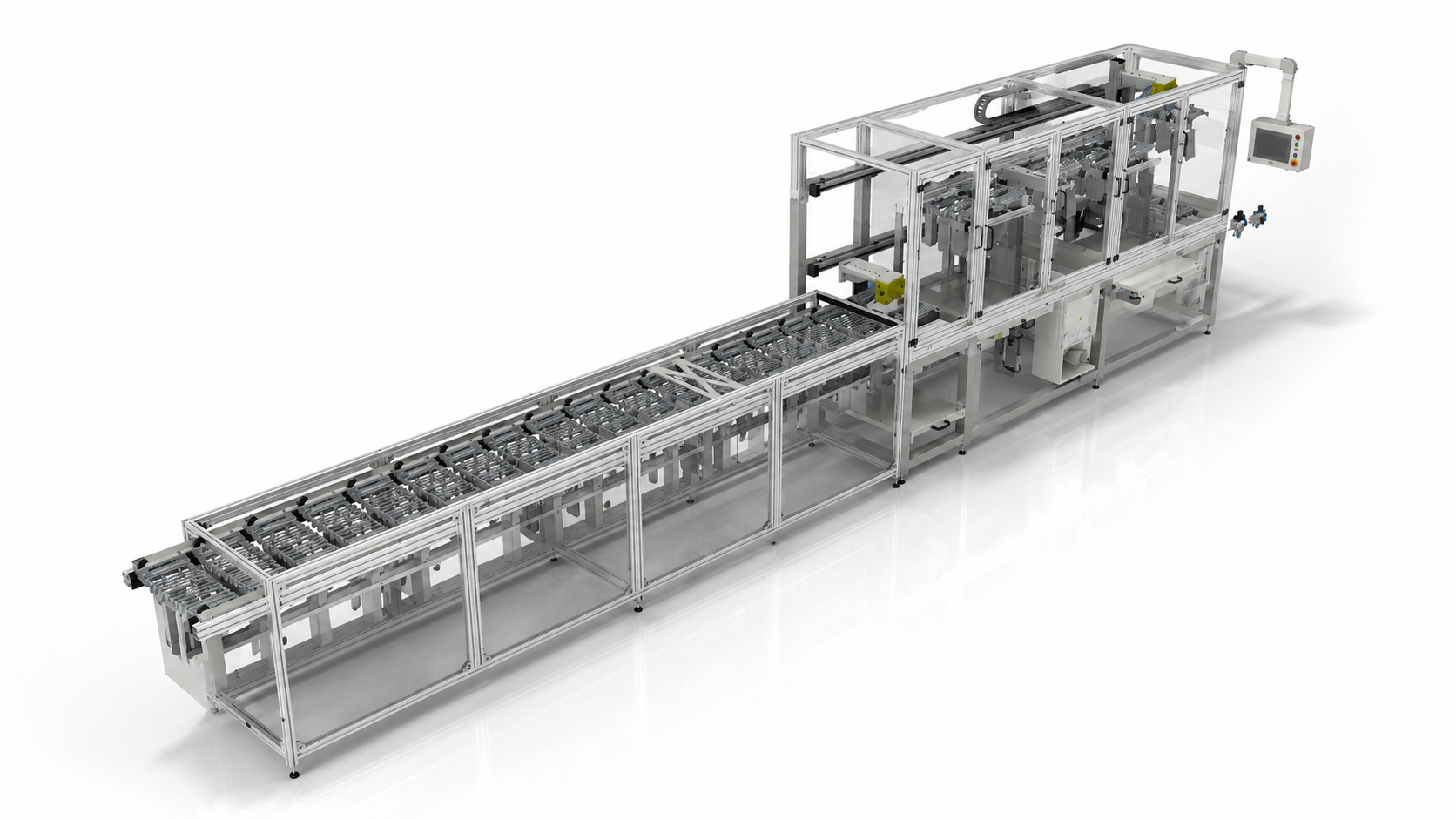
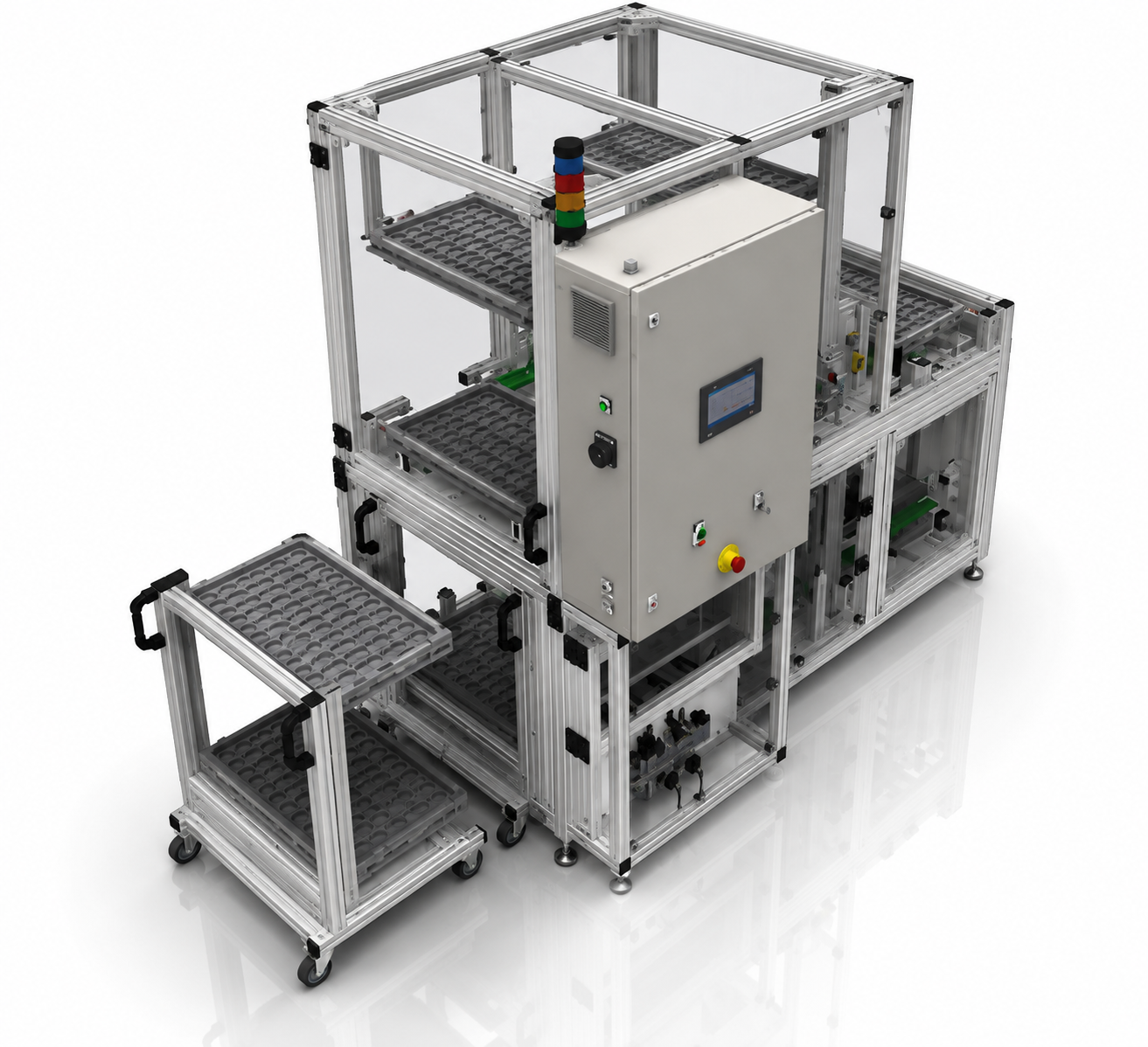
AST system for automatically supplying a line with product blisters or KLT boxes. It supports bidirectional flow into and out of the line and offers modular capacity.
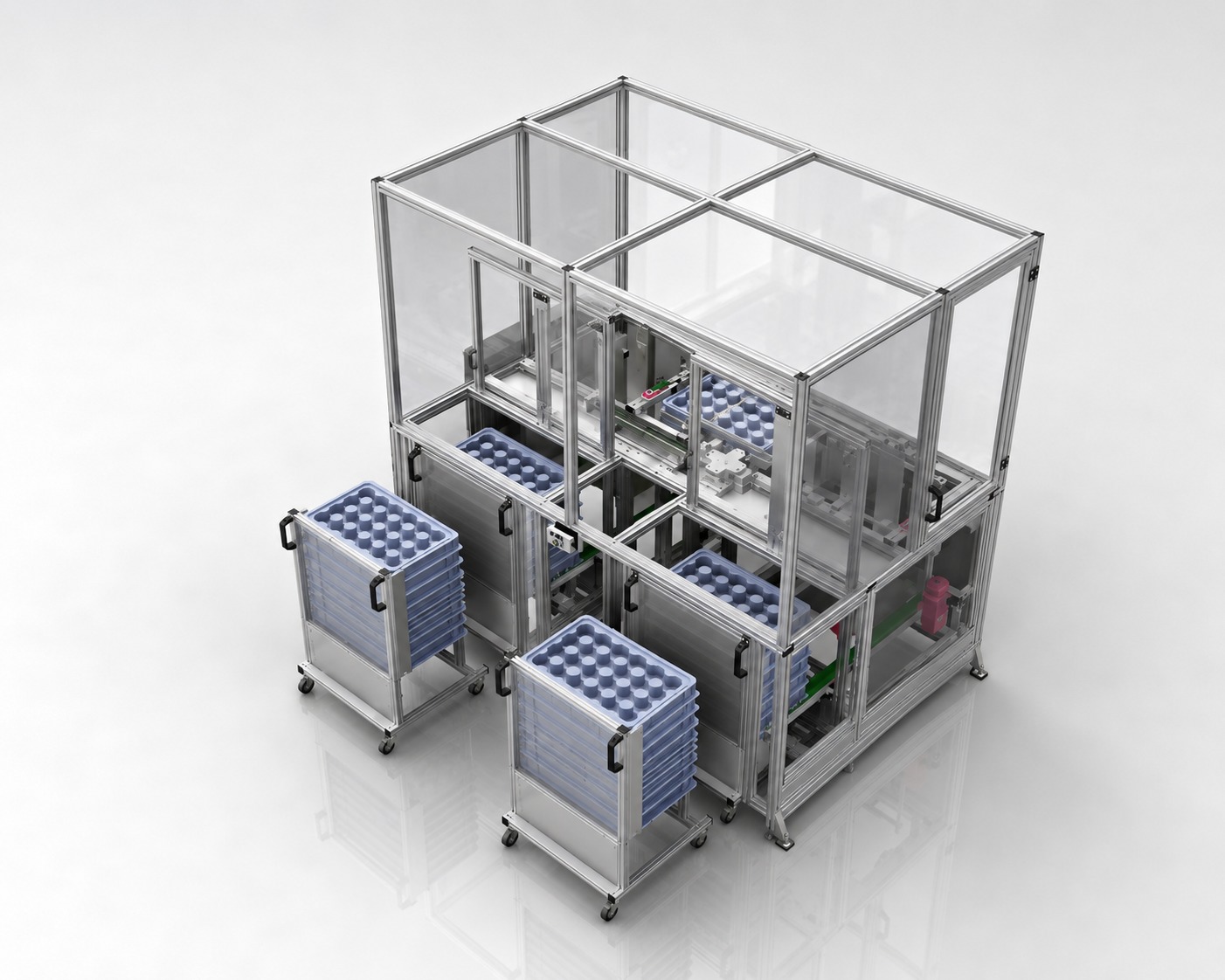
The ALC system automatically supplies a line with blisters or KLT boxes and stacks or separates deep-drawn trays with an undercut outer contour. It supports bidirectional flow, modular capacity and blister changes in under three seconds, with integration into articulated-robot or gantry applications.
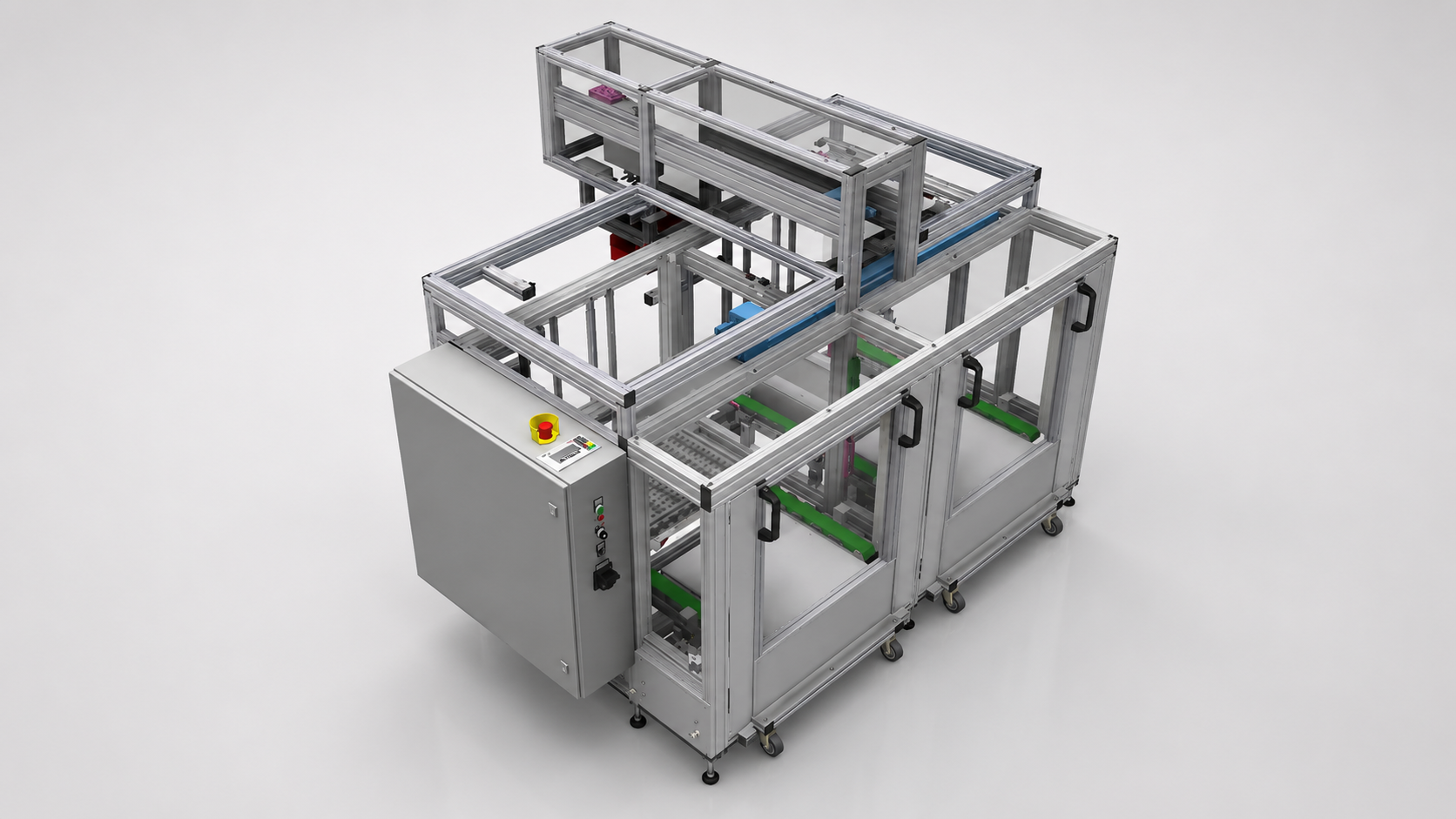
LCP system for automatically supplying a line with product blisters or KLT boxes. It supports bidirectional material flow, modular capacity and product handling by a two-axis manipulator.
The SAST system automatically supplies the line with blisters or KLT boxes directly from an undercarriage trolley. It supports bidirectional flow, modular capacity and the use of a 6-axis or SCARA robot.
Equipment for flushing and pressure-testing several types of coolers used in the power industry. Air blowers then purge the coolers. The system is controlled by a Siemens PLC.
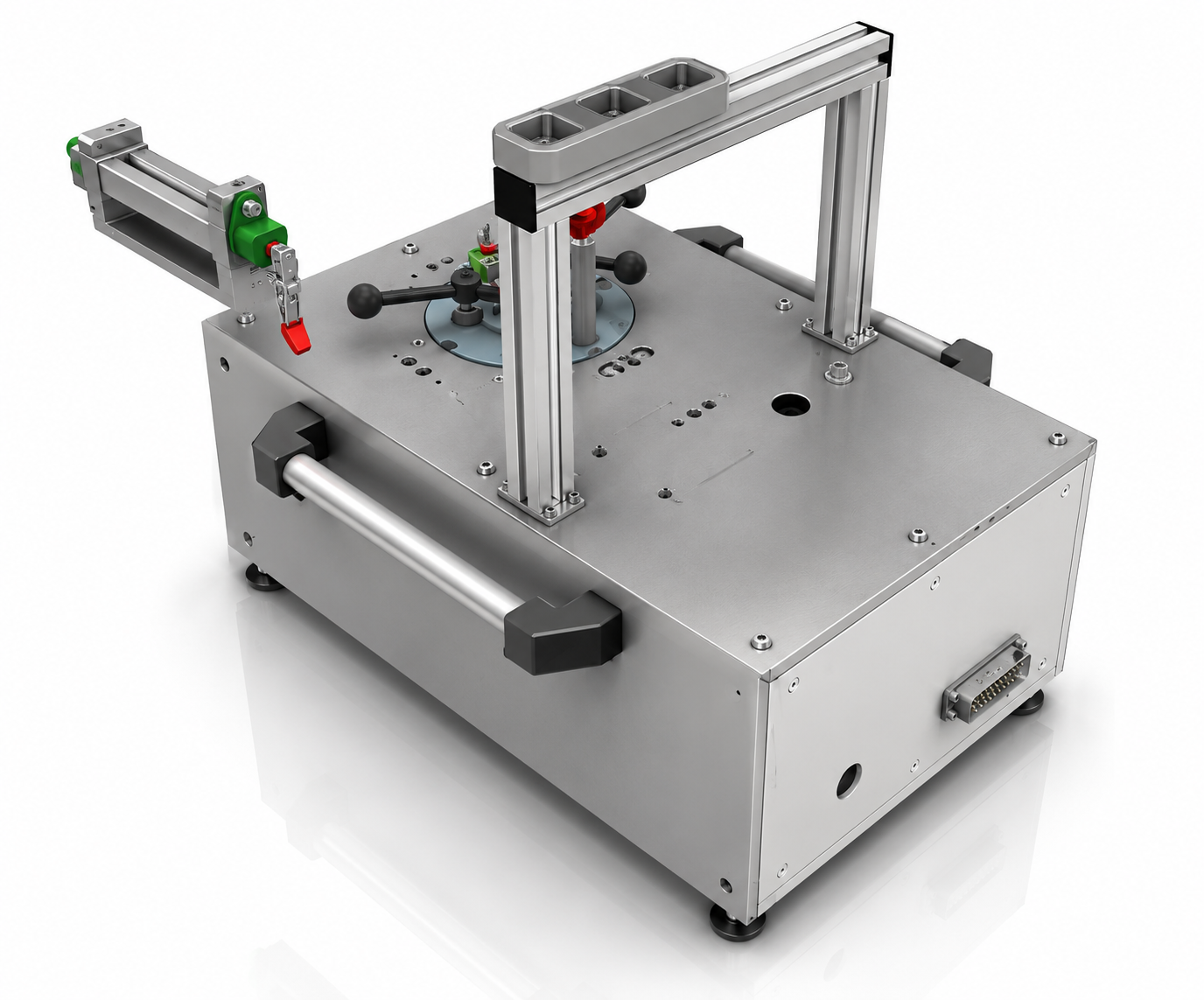
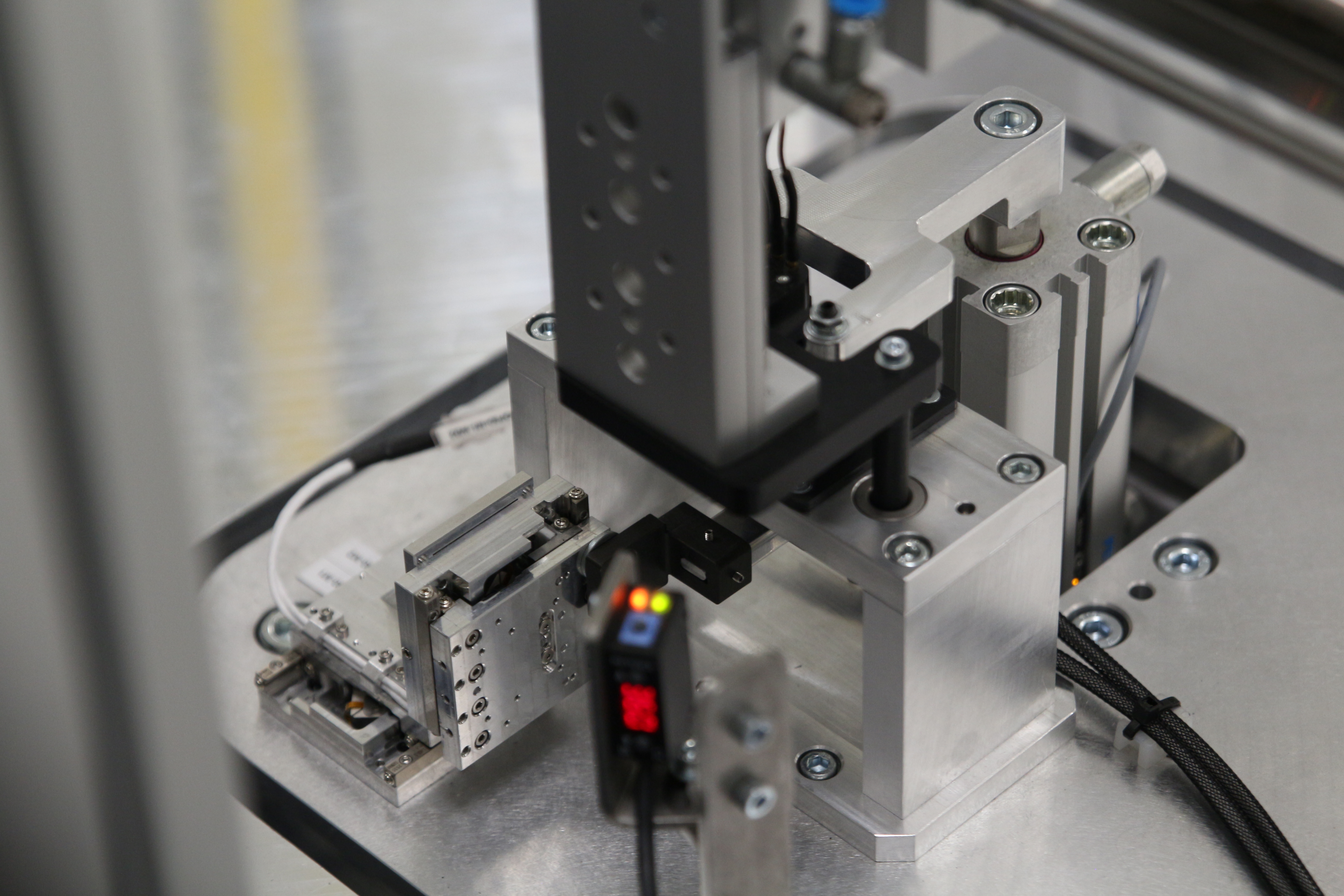
The system tests sensors and measures their switching frequency. Interchangeable fixtures support several sensor variants. Sensor clamping accuracy is 0.02 mm.
The tester performs 100% sensor calibration and inspection. Its software runs on an IPC, while a special micro-positioning table positions the sensor calibration counterpart. VIN and Io3 communication protocols are used, and results are stored in an SQL database.
The tester performs a 100% leak check of every part. The sensor is placed in a chamber that simulates its installation in the transmission.
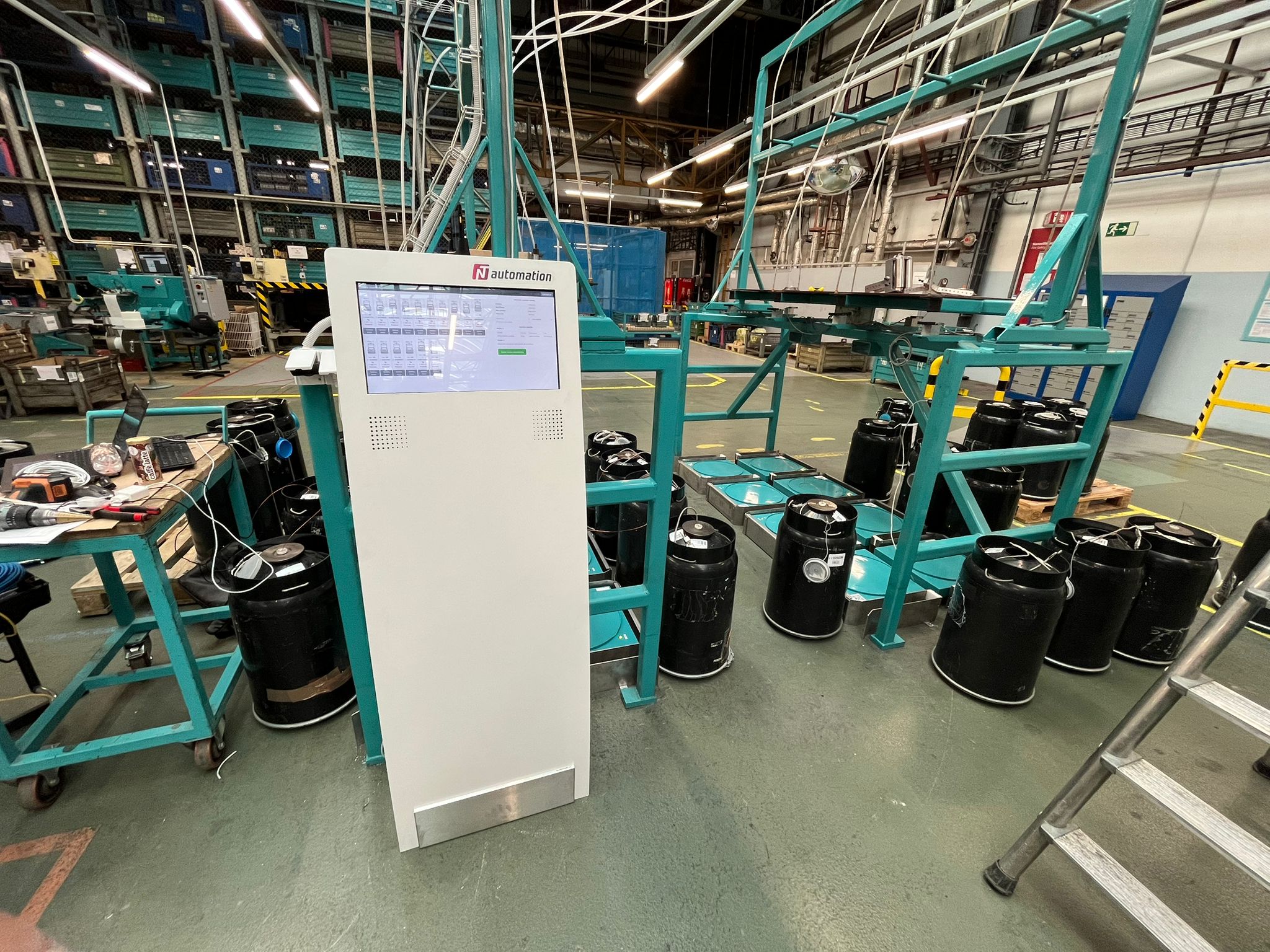
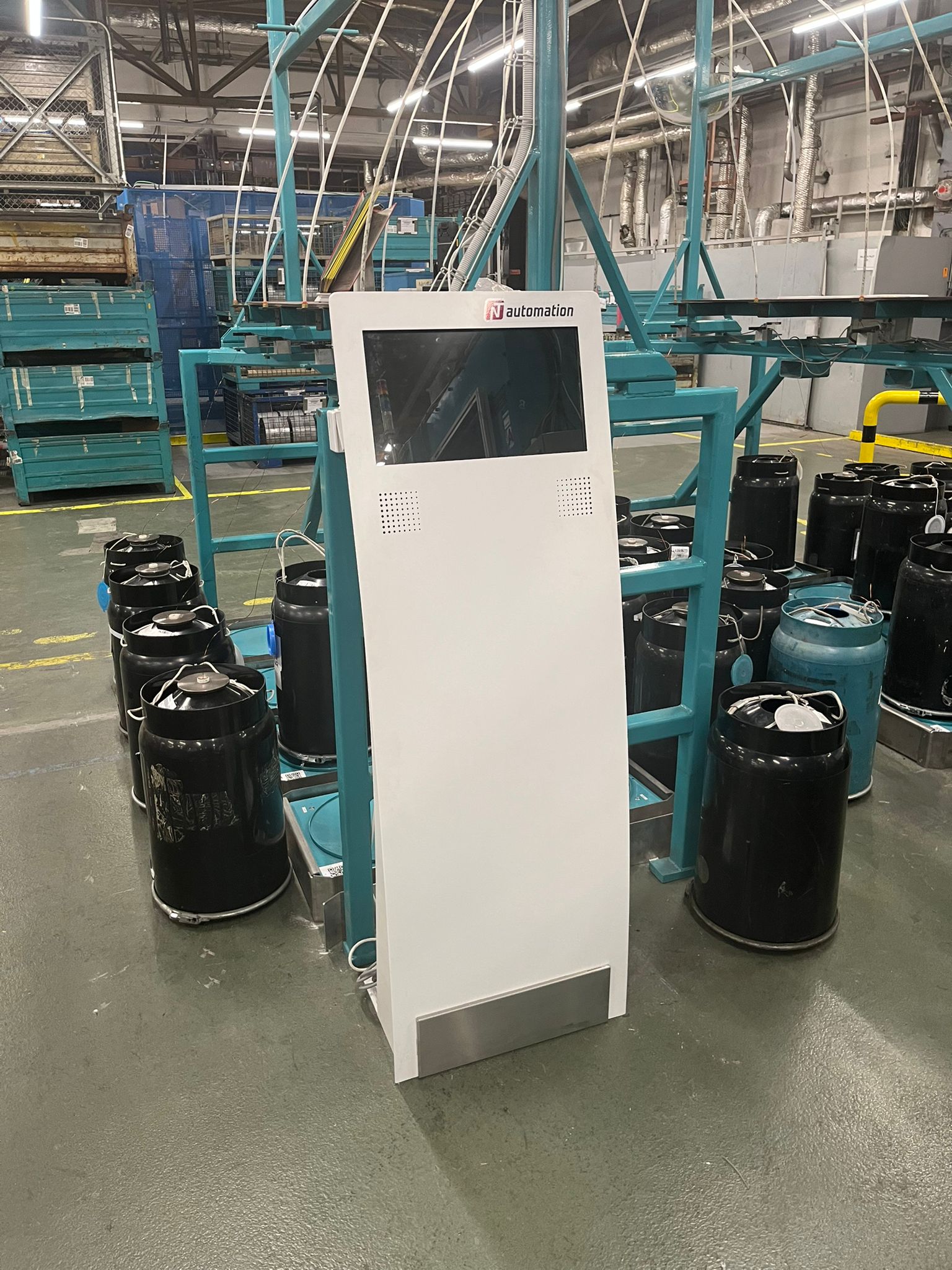
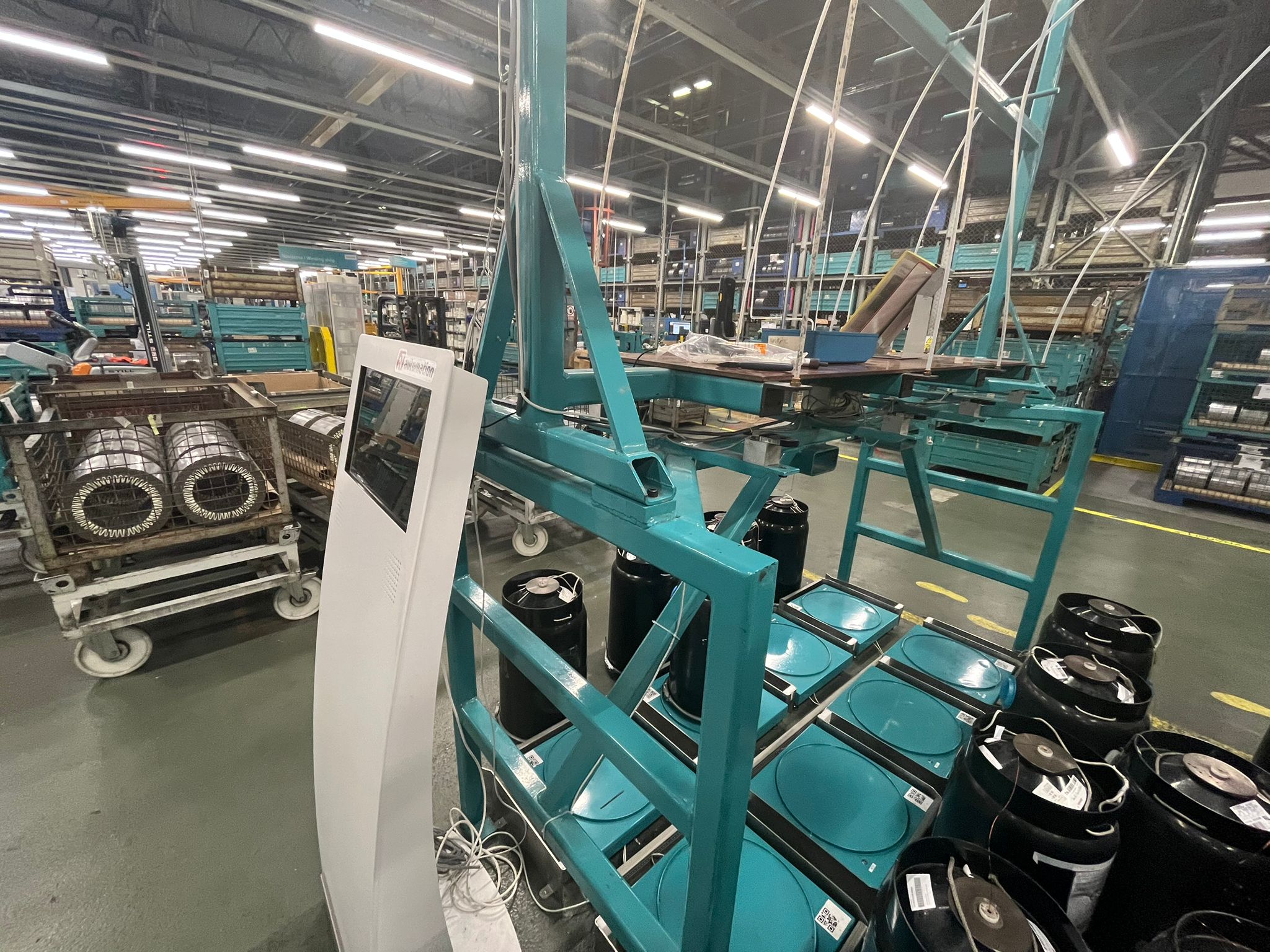
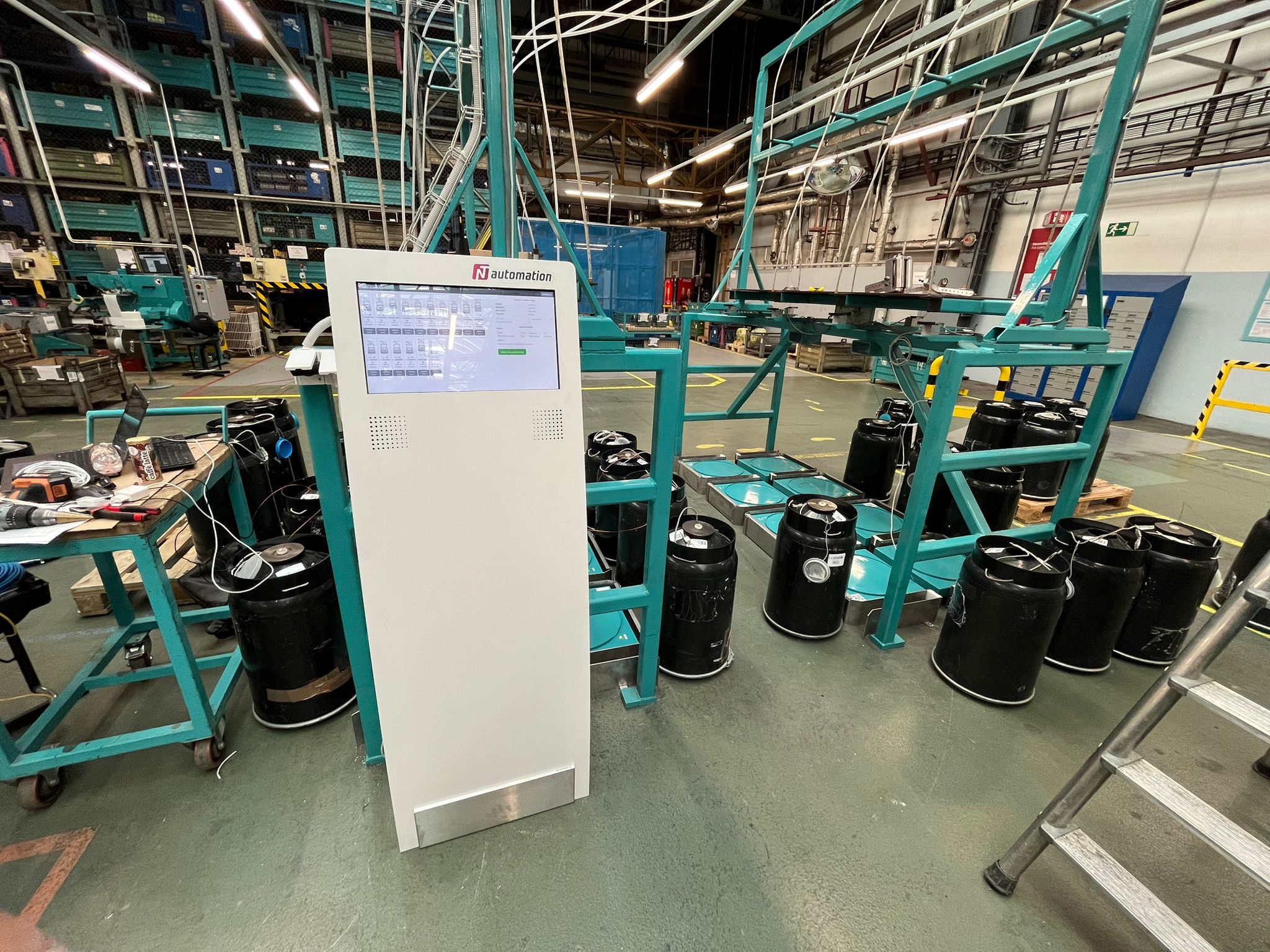
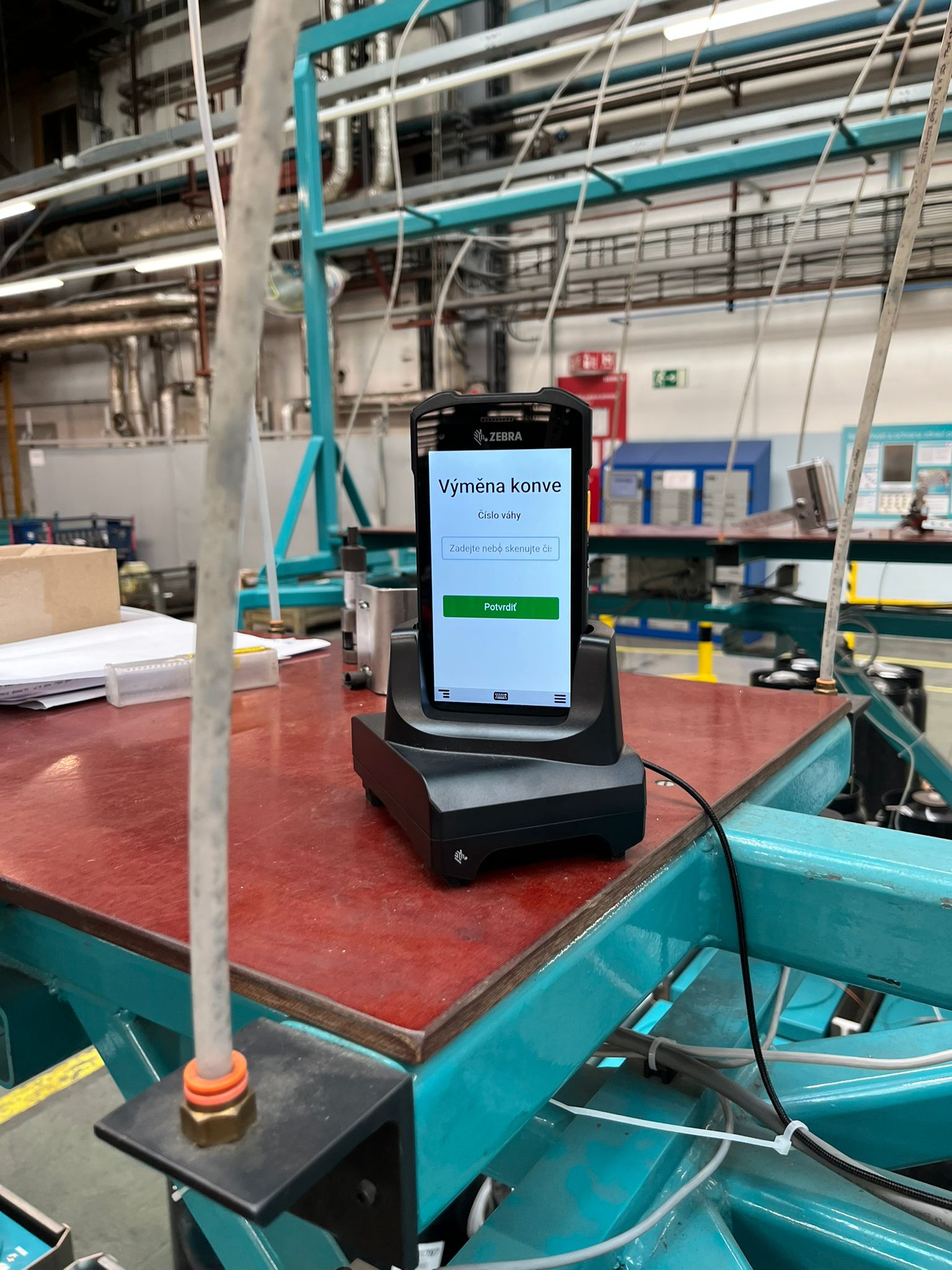
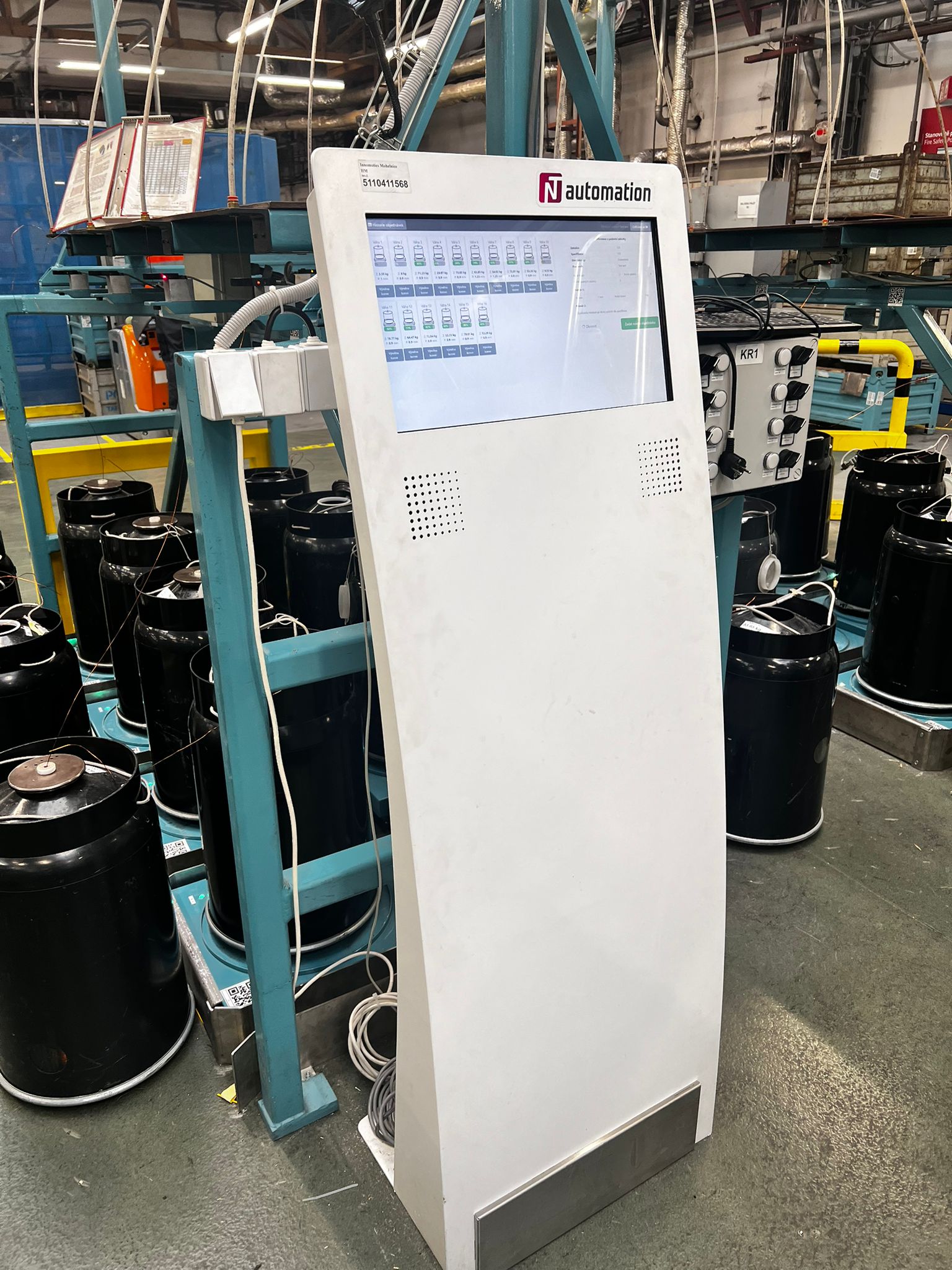
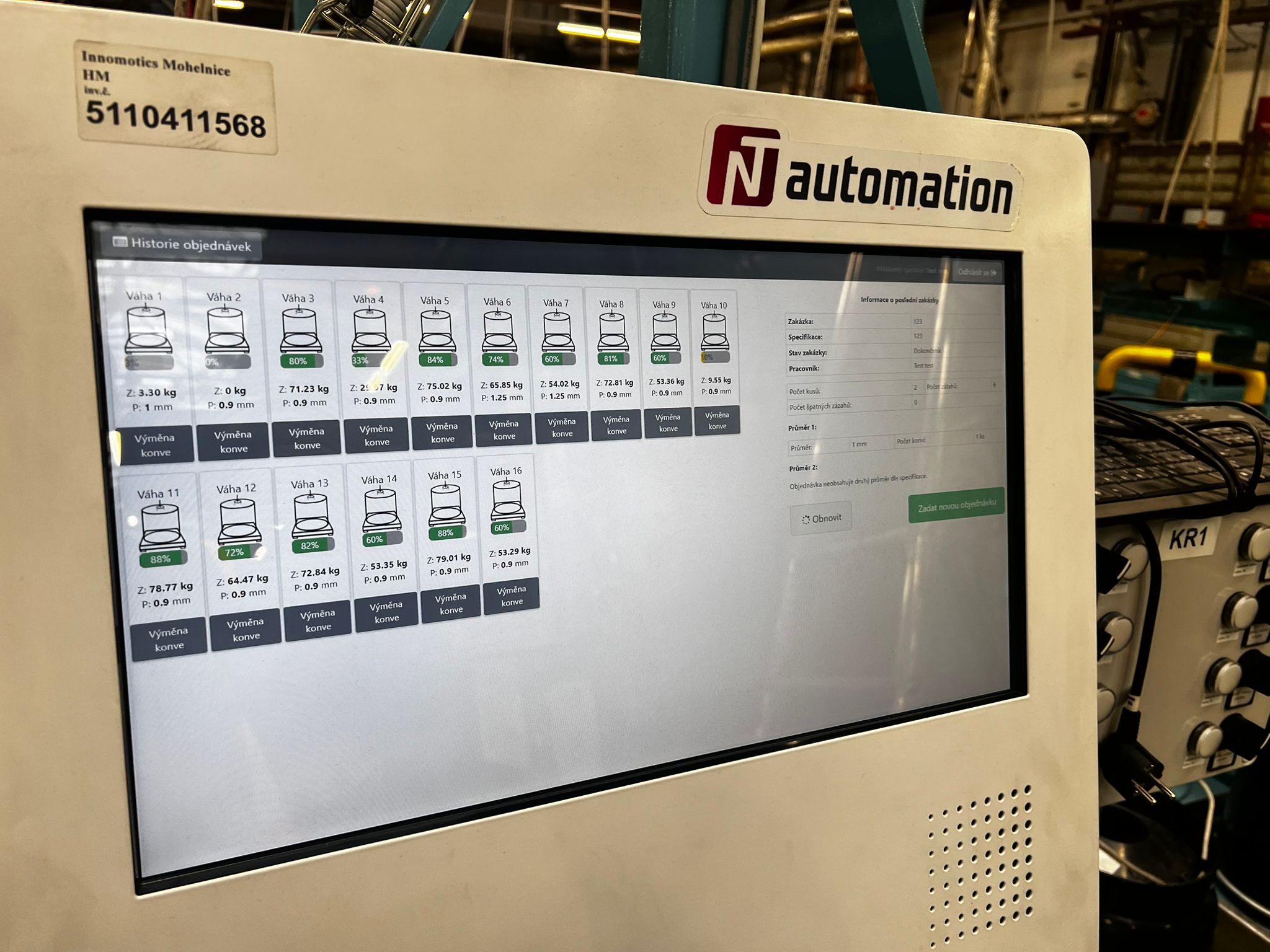
The system measures copper-wire consumption in real time during electric motor production using package weighing. A custom application displays consumption for each coil on an office PC. The workstation also includes a local kiosk with an integrated PC.

Our robotic lines and production digitalisation deliver measurable savings and a rapid return on investment.